1-800-355-2335 |
Mon-Fri: 7:30am - 4pm EST |
Contact Us

FAQ
CAUTION: Always wear goggles when working with wire of any kind. The "whipping" action of a loose strand could take out your favorite eye. Pick up nails when working with wood fence. You will avoid stepping on it later and the lawn mower won't throw it into your neighbor's pet. Keep fingers out of pinch points when working around gates and you'll always be able to count to ten.
For simplicity we have broken down our FAQ sheet into several main categories.
Vinyl
As far as posts that are pre-routed or drilled for rails, what's the difference between line, end, corner, blank and gate posts?
Descriptions of Types of Posts
Ends-Corners-Line-Blank-Gate Posts
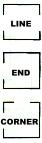 It is important to understand the differences in end, corner, line and gate posts. With some styles of fence it makes no difference, but on other styles, it is a world of difference.
In the case of some ornamental aluminum fences, vinyl fence and wood split rail, the posts have pre-routed holes to accept rails from the fence sections. The position of the holes will determine the use of the post.
For these styles the following definitions and descriptions are true.
End Post: any post that ends a line of fence. A gate terminates a line for this purpose. The fence may continue on the other side of a gate and that post would also be an end post. An end post has holes on one side of the post only for rails to slide into. Only one section of fence is connected to that post. An end post can also be a gate post.
Line Post: any intermediate post that has fence connected to two opposite sides forming a straight line (180 degrees). These posts have holes on two sides of the post, opposite each other. An easy way to figure the quantity of line posts required on a line of fence is to figure the total sections in the line and subtract one. That is why it is necessary to know measurements on both sides of a gate. the gate breaks the total line into two distinctly different lines for these purposes. In some styles of fence, such as split rail, a line post may have holes bored completely through the post so rails can butt to each other, or overlap. Angles close to 180 degrees require the use of line posts. The holes may need widened to allow the rails to slide in, depending on the style of fence.
Corner Posts: any post that is to be used on a 90 degree corner to join two lines of fence. The holes are on two sides adjacent to each other. Corner posts can be used for odd angles where the angle is closer is between 45 and 90 degrees. An angle of 45 degrees may require a corner or line post, depending on style and preference.
Blank Post: a post with no holes. Commonly these are used as a gate post where no fence is to be attached to the post. Therefore a gate post can be a blank post. Your mail box post is a blank post (most likely). Avoid using blank posts as hinge posts. The fact that a fence is attached to the gate post makes it stronger and a lot of sagging gate problems can be traced to leaning blank posts.
Gate Post: a post that is used to latch or hinge a gate. A gate post can be a blank, end, line or corner post depending on how and where sections of fence also must be attached to the post. Every gate has two gate posts, unless another structure is used to latch or hinge the gate from. Often times a gate post is a larger size than the others and a heavier wall thickness, if applicable. This is necessary to hold the weight of the gate.
Hinge Post: a gate post that the gate is hinged on. A double swing gate would have two hinge posts. A single swing gate has one hinge post. Large gates may require a larger hinge post to support the weight of the gate.
Latch Post: a gate post that a gate latches to. A double gate has no latch posts and a single swing gate has one. Most of the time the latch post is the same size as the hinge post for appearance sake, but it does not have to be. A latch post can be an end, line, corner or blank post.
This may not be the final word on definitions of these types of posts, because every manufacturer and installer may have a different description or different terminology, but it may help to clarify the differences. It will increase your odds of getting the correct response by asking for the proper type, instead of asking, "How much are your posts?". Also you will understand that you do not want holes in your gate post that goes next to the garage (that one should be a blank post).
Is it possible to leave existing chain link or wooden posts in place and slip a vinyl post over,
then fill with cement to avoid having to remove and replace the existing posts?
then fill with cement to avoid having to remove and replace the existing posts?
It is possible to reuse existing fence posts and sleeve vinyl posts over them, however it is usually impractical to do so for a vinyl fence installation. Here are a few reasons: *The fence post spacing will most likely be different between the two styles of fence. Most vinyl fences have 6' wide sections (measured center to center of posts) whereas most wood fences are installed with the posts 8' +/- apart. In this case, posts are simply spaced too far apart for the panel to fit. We do carry styles of vinyl and aluminum fence 8' wide, but you would still most likely need to cut the rails to fit and/or use wall mount brackets. The cost and labor to do so sometimes is higher than removing the posts and installing new ones. *Vinyl posts usually will not sleeve over wood 4 x 4s with a tight fit. Most nominal wood posts actually measure 3-1/2'' x 3-1/2''. Our vinyl fences are typically sold with true 4" square or 5" square posts. Although these vinyl posts will fit over the wood posts, they will not fit tight, requiring you to shim the difference for a tight fit. *Vinyl fence horizontal rails typically insert into the hollow vinyl posts. Our vinyl fence posts are usually ordered prerouted to accept horizontal rails. This eliminates the need of often unsightly and weak wall mount brackets used with other brands. Our vinyl fence horizontal rails are cut, notched, and/or drilled so that they will insert into the vertical fence posts and lock in place. If there is a wood fence post inside the hollow vinyl fence post, it complicates the installation. You could 'rip' the wood 4 x 4s smaller so that you can sleeve a vinyl post over and still insert your rails, or you could use all blank (unrouted posts) and use wall mount brackets at every post to rail connection. If you use wall mount brackets, you will need to neatly cut both ends of every horizontal rail (the part that usually inserts into the post) and use wall mount brackets. The use of wall mount brackets will increase the cost of your project and increase labor time. *Concrete footers may be insufficient and fence posts may not be plumb. The setting of fence posts in a proper size hole with sufficient concrete may be the single most important factor in properly building a fence that will last. The holes dug for a fence are usually calculated and installed specifically for the type of fence to be installed. A 3' high chain link fence that allows wind to flow through it may have 6" diameter x 30" deep concrete footers in the ground for each post. A 6' high vinyl privacy fence on the other hand may have 12" diameter x 36" deep concrete footers for support to withstand the extra wind load and weight. Cedar fence posts are usually not cemented in the ground at all. If you wish to tear down a fence and reuse the posts for a new style of fence, you must be certain the posts are anchored in the ground properly for the new fence style. If the wood fence above ground has weathered and shows sign of rot, chances are the posts are in poor shape too and may not be plumb. To summarize, it is generally not a good idea to use existing posts for a new fence of a different type, style, and material. It will often result in higher costs for materials and labor. Furthermore, if the fence is failing structurally or aesthetically above ground, it probably is below ground too. More information on vinyl fence installation.
I have a sharp slope on my property. What difficulties could I have installing a pre-fabricated ornamental fence?
Raking and Stair Stepping Panels
When the grade of the property follows a slope a decision must be made on the method of installation. It will affect the type of posts that need to be ordered, if they are pre-routed to accept rails.
A line post has pre-routed holes on two sides opposite each other and the holes line up with each other so panels can be installed level to each other. On level ground this is fine. If panels are to be "raked", these posts will work also. "Raking" is shifting the panel out of square as in the following illustration.
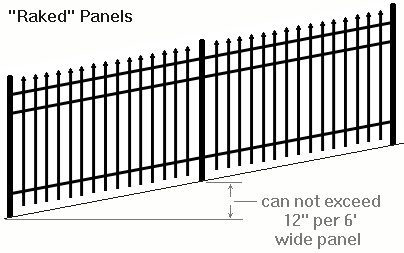
There is a limit that some panels can be raked. With ornamental aluminum the limit is 12" over a 6' wide panel in most cases. Certain styles may rake more or less than this amount. Some styles can not be raked at all. This may be the preferred method in order to keep a uniform small space under the fence, so the family pet can't get out. If the grade is steeper than that or the style can not be raked, "Stair Stepping" is necessary.
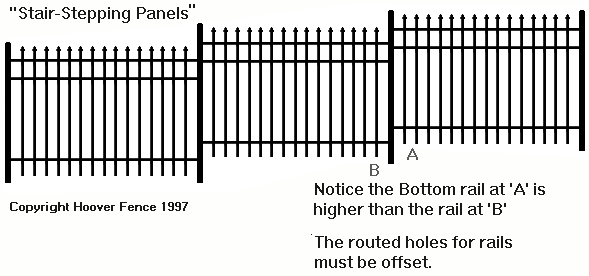
In this case, order end posts instead of line posts, because the second set of routed holes must be higher or lower than the first set in each post. Since it is tricky to estimate the amount of drop or rise, it is best to field route the second set of holes to the desired offset. Each panel could be slightly different for a custom fit.
The same principle may apply to a corner post, if a "stair step" must be made at the corner. Order an end post for that corner also.
This demonstration is another reason why ordering your fence from Hoover Fence is a wise choice. How many other pitfalls are awaiting you. We provide online and offline assistance by toll free telephone, fax or email!
How do I figure cost per foot on vinyl fence?
Vinyl Fence - Figuring Cost Per Foot
We feature all our products online for your convenience complete with current pricing, specifications, and helpful how-to information. A cost per foot for vinyl fence is attained by adding one section of fence to one line post and your choice of post cap. Divide this sum by the post spacing.Example:
(5' Imperial Fence used for example)
1 - fence section = $132.48
1 - line post = $20.01
1 - exterior flat cap = $2.45
Post Spacing = 91"
Do the Math
132.48 + 20.01 + 2.45 = $154.94 / 7.58 = $20.44 / foot.
Use this total / foot to figure your cost, depending on how many foot of fence you require. Don't forget the gates!
Longevity?
Vinyl fences we supply are manufactured like vinyl siding, which has a long track record of providing durability and longevity. However, the base ingredient PVC (polyvinyl chloride), is altered to provide for increased superior impact resistance and ultra violet protection. With our fences and proper installation, one can be assured of a fence that will remain aesthetically appealing and structurally sound.
Warranty?
Vinyl fences we supply are warranted against manufacturing defects for the lifetime of the product. See warranty document for additional more specific warranties.
Layered Strength?
Vinyl fences we supply have an exterior layer for ultra violet protection and an interior built for impact resistance. They are co-extruded and will not separate.
Expense?
In general, the initial cost of vinyl fencing is higher than other fence styles. However, when compared on the long run, vinyl fencing remains maintenance-free while other fence styles increase in maintenance and repair costs.
Recycled Plastic?
Vinyl fences we supply do not use the waste stream as a source. Some other vinyl fences do and it reduces the quality of the products. Our vinyl fences are recyclable and are used when the plastic meets rigid specifications.
Cold Weather Damage?
Naturally plastic becomes less flexible in cold temperatures. Vinyl fences we supply are designed to withstand normal climatic changes. Under normal conditions and without unusual impact, these fences will not snap or break. Proper installation of concrete footers will prevent post heaving.
Color Loss?
Vinyl fences we supply are manufactured with titanium dioxide, which decreases the likelihood of ultra violet damage.
Color Availability?
All the vinyl fences we supply are available in white. Some are available in tan (ivory) and grey. Because titanium dioxide, a color loss and change inhibitor, is white in pigment, it is difficult to provide darker colors. Naturally, darker colors attract sun rays and heat, increasing the likelihood of warping, sagging, and other sun damage. The latest developments in vinyl color is allowing more and more darker colors to be introduced. Our CertaGrain colors are a good example.
Flammability?
Vinyl fences we supply are classified as "self-extinguishing" and will not readily ignite.
Safety?
Because there are no protruding sharp screws, nails, and splinters, injury is unlikely. The no-taste factor of PVC decreases the likelihood of horse chewing. However, interior post caps are recommended for use with horses.
Expense?
In general, the initial cost of vinyl fencing is higher than other fence styles. However, when compared on the long run, vinyl fencing remains maintenance-free while other fence styles increase in maintenance and and repair costs.
I have two vinyl PVC fence brands on my property, I have noticed that the fence post caps are not interchangeable? I have the need to purchase 50 post caps for the brand name "US Fence". Do your fence caps fit this brand? Also is interior vs. exterior mean the fence cap fits the inside the post vs. outside the post on how the caps attach?
Thank you for writing. You are correct, not all vinyl post caps will fit all vinyl posts. Not only does size make a difference (3-1/2'', 4'', and 5'' are common sizes of vinyl post caps which are available), but also the radius which is found in the corner of the cap can affect a proper post cap fit. Some manufacturers of vinyl post caps have a sharp 90 degree angle on the inside lip of the vinyl post cap; some have a smooth curved 90 degree bend on the inside of the caps. The shape of the inside of the post cap can make a difference if the cap fits properly or not. Occasionally, one can grind out the inside of the cap for a proper fit without it being visible on the outside, however grinding 50 post caps would be quite a chore. Vinyl post caps are made to fit either the inside of the post and are often called 'interior caps', or are made to fit the outside of a post and called 'exterior fit'.
Question or Comment: I'm planning to fabricate a vinyl picket fence about 12 feet long with three support posts that will go from 4 feet to about 9 feet high with a sweeping curve to it. It will be attached to the end of the house on the high side to have some additional privacy. My question is: Do you sell long lengths of picket fencing so I could make this unit without attaching one to picket to another to get the height of 9 feet?
Thank you for writing. Our vinyl picket fencing is sold in 6' and 8' wide sections depending on which fence style you choose. Depending on if we have a stock style that will fit your needs, or not, you may be fabricating something custom. We do not have a picket style of fence 9' high. We do have privacy fence, the tallest fence being 8' high. We carry an assortment of vinyl fence profiles: posts, pickets, and fence horizontal rails that are used while producing our vinyl fence styles, picket, ornamental, semi-private, and privicy fence. Most all of these vinyl fence profiles are for sale individually.
I suggest reviewing our vinyl fence styles to find vinyl fence components which may fit your application. Most all of our vinyl fence styles and components are available online complete with current pricing, specifications, and helpful how-to information. You may also send us a tentative material list with quantities and sizes of vinyl fence components for our review and quotation.
I suggest reviewing our vinyl fence styles to find vinyl fence components which may fit your application. Most all of our vinyl fence styles and components are available online complete with current pricing, specifications, and helpful how-to information. You may also send us a tentative material list with quantities and sizes of vinyl fence components for our review and quotation.
For More Information see Installation Tips