
FAQ
CAUTION: Always wear goggles when working with wire of any kind. The "whipping" action of a loose strand could take out your favorite eye. Pick up nails when working with wood fence. You will avoid stepping on it later and the lawn mower won't throw it into your neighbor's pet. Keep fingers out of pinch points when working around gates and you'll always be able to count to ten.
For simplicity we have broken down our FAQ sheet into several main categories.
Chain Link
My property is not level. The terminal posts must be installed plumb. How do I connect the square end of the chain link fabric to a post that will not be square to the fabric?
What you need to do in this situation is to make an angle cut on the end of chain link fabric prior to terminal post hookup to allow for slopes. If the top edge of the fabric does not create a right angle to the terminal post, the fabric must have a bias cut and the tension bar must slide into that end at the appropriate angle in order to be parallel to the post. Failure to do so will leave the top or bottom of the fabric loose, depending on the whether the slope rises to the terminal post or falls down to the terminal post. See Figures 'A' and 'B'.
My quick hand drawn illustrationAnother quicky hand drawn illustration
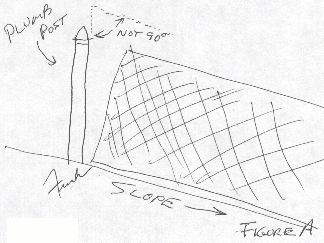
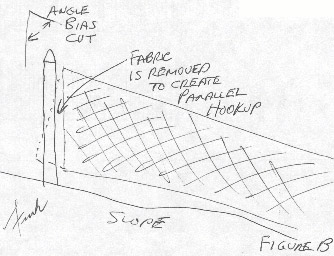 Making The Bias Cut
Install the top rail. Tie the chain link loosely to the top rail in the proper postion on the rail, so it follows parallel to the top rail. Pull it to the terminal post until the shortest of the two, top or bottom, just reaches the post. The other corner of the fabric will overlap the terminal (Figure B).
Count the number of weaves (not diamonds) that overlap the terminal on the long corner. Let's call this 'Cut Count'. This count is the number of cuts that must be made ultimately. Next, count the number of full diamonds on the height (Height Count).
Divide the 'Height Count' by the 'Cut Count'. Round up to nearest whole number. This number (Diamond Count) represents the number of diamonds to count before making a weave cut. Figure B illustrates an upward grade. The grade could be exactly opposite, a downward grade. The grade type will determine which end needs to be cut. In Figure B, you must start counting down from the top. Count out the 'Diamond Count' and cut the last weave in the roll. Remove the bottom portion of that weave from the fabric, cutting the other end of the weave, if necessary. At the cut, count down your 'Diamond Count' and cut the next weave. Remove the bottom portion again. Repeat until you reach the bottom of the fence.
The tension bar can now be slid into the fabric following the angle created by your bias cut. It is possible that the bias is so sharp (Diamond Count of 1 or 2), that it is nearly impossible to slide the tension bar into the fabric. You may have to bend the diamond slightly where the tension bar is hitting a weave as it is slid into the fabric.
MORE INFORMATION:
My quick hand drawn illustrationAnother quicky hand drawn illustration
Making The Bias Cut
Install the top rail. Tie the chain link loosely to the top rail in the proper postion on the rail, so it follows parallel to the top rail. Pull it to the terminal post until the shortest of the two, top or bottom, just reaches the post. The other corner of the fabric will overlap the terminal (Figure B).
Count the number of weaves (not diamonds) that overlap the terminal on the long corner. Let's call this 'Cut Count'. This count is the number of cuts that must be made ultimately. Next, count the number of full diamonds on the height (Height Count).
Divide the 'Height Count' by the 'Cut Count'. Round up to nearest whole number. This number (Diamond Count) represents the number of diamonds to count before making a weave cut. Figure B illustrates an upward grade. The grade could be exactly opposite, a downward grade. The grade type will determine which end needs to be cut. In Figure B, you must start counting down from the top. Count out the 'Diamond Count' and cut the last weave in the roll. Remove the bottom portion of that weave from the fabric, cutting the other end of the weave, if necessary. At the cut, count down your 'Diamond Count' and cut the next weave. Remove the bottom portion again. Repeat until you reach the bottom of the fence.
The tension bar can now be slid into the fabric following the angle created by your bias cut. It is possible that the bias is so sharp (Diamond Count of 1 or 2), that it is nearly impossible to slide the tension bar into the fabric. You may have to bend the diamond slightly where the tension bar is hitting a weave as it is slid into the fabric.
MORE INFORMATION:
I am having problems installing the bottom tension wire on my chain link fence. If I use a come-a-long to pull it tight, I can't get the end tight enough on the final hookup. What is the best way to stretch tension wire tight?
Installing tension wire tight can be a real challenge even for some experienced installers. Here are some tips that will help.
Tension wire is commonly used to stiffen the top or bottom of a chain link fence and is installed to pass at the center of the top or bottom diamond of the chain link fabric. Contrary to the belief that it somehow is woven through the diamonds, the tension wire is fastened to end, corner, stretch or gate posts (called terminal posts), usually at the same posts that the chain link fabric is stretched to, and passes continuously past the line posts without any connections at the line posts. In the case of bottom wire, the wire should be placed on the same side as the chain link between the line posts and chain link fabric. The top wire is used in place of top rail and is installed, like top rail, through the loop caps on the line posts.
Many types of wire are used for tension wire. The intended wire is usually a 7 ga. wire which comes in large coils (about 18"-24" in diameter) and is not perfectly straight. It has slight bends back and forth, called springs, that resist being pulled straight, which helps keep the wire tight after installation. 6-7 ga. tension wire usually comes in 1000' coils.
Many residential installations will require a lighter gauge, in which case, a straight wire is used without the 'springs'. We recommend a 12 1/2 ga. hi-tensile wire for this type of application. It is made to stretch, whereas most other types are difficult to keep tight and often times it will break, if over stretched. Unfortunately, most contractors do not use this type and it is difficult to find it smaller than 2000' coils (no we will not try to uncoil and measure out 115' for you - a $2.30 sale that takes half a day). You could purchase the whole coil (for about $40.00) and save the rest. You'll have a lifetime supply of utility wire for your household projects. If this is a no-go proposition, purchase a heavier regular gauge in a manageable footage.
First of all, use brace bands and bolts for the terminal post hookups. The method of wrapping the wire around the end posts is inferior and can make the installation a lot more difficult. The savings in fittings are not worth the money and the method is a no-go on most spec. jobs.
Stretch the tension wire on the same side as the chain link is to be installed and install it before the chain link. Make your first connection by making a small loop in the wire of about 1-1 1/2" or smaller so a 5/16" bolt will slide through it easily. Wrap the wire around itself tightly.
The easiest way to do this with 7 ga. wire is to hold the loop flat between large pliers very firmly. Use a helper, if available, because this may take two hands to hold it tightly. You can also pass a large heavy duty screw driver, or the handle of your pliers through the loop hole. Give yourself plenty of tail wire to work with, with the intention of cutting off the excess after wrapping. Use the hole in the handle of a crescent wrench, by sliding the tail of the wire through the hole and using the wrench to bend the wire around itself. The wrench will ride flat against the wire and as you wind it around the wire you can wrap it very tightly and neatly. The wrench will give you leverage as it lies on the wire and the end passing through the hole is pulled around the straight part of the wire. If you leave a lot of tail wire (about a foot), you can easily wrap it be hand, although not as tightly as the previous method, and cut off the excess. (Don't worry about losing the .0056 cents, it will cost you $5.00 in time fussing with the short ends). About 5-6 wraps meets most requirements. There is a way to spread your fence pliers with the loose end between them and force the end to wind tightly around itself, but unless you can picture that clearly in your mind, forget it because I don't have time to draw you a picture.
Now make the hookup by bolting the loop onto a brace band about 2-3" from the bottom of the terminal. That method is easier than grunting down in the mud at the bottom of a post trying to wrap the wire, while your pants slide down revealing your butt crack to passing traffic. Not a pleasant site regardless of your physique.
Uncoil the wire carefully as you back up the fence line to the next hookup. Make sure you are on the chain link side of the posts as you do so. Many installers prefer to have one person hold the coil at one end of the stretch while the other person pulls out the wire to the opposite end. Whichever method is used, do not let the coil unroll itself by simply laying it on the ground and pulling wire out, unless you want the worst tangle of wire you could possibly imagine. Always wrap a rope or wire around the coil before leaving it on its own. It can be like a snake, left unattended, that will self-tangle, causing the most religious to use unfavorable language.
On long stretches, use a come-a-long and wire gripper to pull the wire tight. Don't wrap the come-a-long too close to where the brace band belongs or you will be fighting for space. 6" higher than the ultimate resting place of the brace band should suffice. Use a wire or cable sling to hook the come-a-long to the terminal instead of wrapping the come-a-long around the post and hooking it to itself. Your come-a-long will last longer and you won't get those nasty splintered cable wires that always seem to find their way 1/2" or so up your fingernail. (It evens hurts to think about it doesn't it?)
After tightening, pull the slack past the terminal post and cut the wire about a foot past the post. Hold both ends of the wire before cutting. I saw the end spring back ten feet one time and knock a man's tooth out. It did not improve his appearance.
Put the other brace band and bolt into the position where it belongs. Pull the wire hand tight as hard as you can past the post with one hand and place your thumb of the other hand to mark the position where the wire and bolt in the brace band intersect. Now without losing that position bend the wire end sharply at your marking thumb so the wire makes a right angle bend. That is where the next loop has to be. You can choose to make the loop like previously with your nose out of the mud or push the end into the brace band and wrap it in its final position. On top wire I choose the later and on bottom rail, I prefer to pre-loop. Be careful not to shorten the length, if you pre-loop, but if you do, you can always crank the come-a-long a little tighter until the loop will reach the brace band. Slide the brace band bolt through the loop and tighten the bolt.
If the stretch is too short, say 10' or less, do not use a come-a-long at all. Simply hand pull it tight, make your 90 degree wire bend as described before and pre-loop the wire just a hair short. If you make the second loop a little larger, about a 2" loop, you can form the loop rounder or more oblique to reach the brace band when bolting it. If you fail to get it as tight as you would have liked, don't panic. Simply take a pair of pliers and place the jaws around the wire stretch at a 90 degree angle and with the handles spread apart twist the pliers, forcing a crimp in the wire, which will tighten it. Repeat this crimping method every 6 inches or so along the length of the stretch until the wire is tight.
Most installers over tighten the stretches with a come-a-long. Do not crank the come-a-long until it will crank no more. That is too tight assuming you are using a 1000 lb. come-a-long. If you are using the 2 ton variety with the pulley on the cable, lose the pulley. That makes it a 1 ton come-a-long. That is enough for any fence or wire stretching.
Another tip: Temporarily tie the bottom tension wire to every fifth line post or so by lifting it a couple of feet above the ground. This will get the wire out of your way for stretching the chain link and avoid the chain link bottom getting tangled in the tension wire.
After stretching the bottom tension wire release the temporary ties and hog ring the tension wire half way up on the bottom chain link diamond. Place hog rings a maximum of 2' apart or as needed securing the wire to the chain link mesh. Ideally place alternate the hog rings in such a way that one is 'squeezed' to the bottom of the diamond and the next to the top wire in the diamond. The wires I speak of are the top and bottom bottom diamond wires that intersect on the sides of that diamond. This, in effect lifts the bottom wire, when attached to a top intersecting wire, and pulls down on a bottom intersecting wire. The wire should still be straight, but it will bind it so it doesn't fall completely to the bottom of the diamond, like it would if you connected it only to bottom intersecting wires.
No tie wires are necessary to hold the tension wire to the line posts unless you are anal retentive.
Someday I'll add some much needed illustrations here, but I just got six phone calls; two customers are wondering when they are going to get a fence they bought yesterday, one customer whose fence was installed 9 years ago wonders if her warranty is still good (I'm not real sure we did the job), a truck broke down, a Bobcat has a flat over on that junk yard job that I tried to get out of but couldn't and some gal from a Tennessee fence company just called who wants to know how a gate opening size is measured (hint 'opening size' - did she use our 800 number?).
CAUTION: Wear safety glasses when handling wire - you will look kind of funny with a 1000' coil of wire hanging from your eyeball. Also use bolt cutters for cutting 7 gauge wire instead of pliers to impress your co-workers with your powerful grip, or twenty years from now you won't be able to twist the cap off a pickle jar for your wife (gee..how do I know that?)
MORE INFORMATION:
Tension wire is commonly used to stiffen the top or bottom of a chain link fence and is installed to pass at the center of the top or bottom diamond of the chain link fabric. Contrary to the belief that it somehow is woven through the diamonds, the tension wire is fastened to end, corner, stretch or gate posts (called terminal posts), usually at the same posts that the chain link fabric is stretched to, and passes continuously past the line posts without any connections at the line posts. In the case of bottom wire, the wire should be placed on the same side as the chain link between the line posts and chain link fabric. The top wire is used in place of top rail and is installed, like top rail, through the loop caps on the line posts.
Many types of wire are used for tension wire. The intended wire is usually a 7 ga. wire which comes in large coils (about 18"-24" in diameter) and is not perfectly straight. It has slight bends back and forth, called springs, that resist being pulled straight, which helps keep the wire tight after installation. 6-7 ga. tension wire usually comes in 1000' coils.
Many residential installations will require a lighter gauge, in which case, a straight wire is used without the 'springs'. We recommend a 12 1/2 ga. hi-tensile wire for this type of application. It is made to stretch, whereas most other types are difficult to keep tight and often times it will break, if over stretched. Unfortunately, most contractors do not use this type and it is difficult to find it smaller than 2000' coils (no we will not try to uncoil and measure out 115' for you - a $2.30 sale that takes half a day). You could purchase the whole coil (for about $40.00) and save the rest. You'll have a lifetime supply of utility wire for your household projects. If this is a no-go proposition, purchase a heavier regular gauge in a manageable footage.
First of all, use brace bands and bolts for the terminal post hookups. The method of wrapping the wire around the end posts is inferior and can make the installation a lot more difficult. The savings in fittings are not worth the money and the method is a no-go on most spec. jobs.
Stretch the tension wire on the same side as the chain link is to be installed and install it before the chain link. Make your first connection by making a small loop in the wire of about 1-1 1/2" or smaller so a 5/16" bolt will slide through it easily. Wrap the wire around itself tightly.
The easiest way to do this with 7 ga. wire is to hold the loop flat between large pliers very firmly. Use a helper, if available, because this may take two hands to hold it tightly. You can also pass a large heavy duty screw driver, or the handle of your pliers through the loop hole. Give yourself plenty of tail wire to work with, with the intention of cutting off the excess after wrapping. Use the hole in the handle of a crescent wrench, by sliding the tail of the wire through the hole and using the wrench to bend the wire around itself. The wrench will ride flat against the wire and as you wind it around the wire you can wrap it very tightly and neatly. The wrench will give you leverage as it lies on the wire and the end passing through the hole is pulled around the straight part of the wire. If you leave a lot of tail wire (about a foot), you can easily wrap it be hand, although not as tightly as the previous method, and cut off the excess. (Don't worry about losing the .0056 cents, it will cost you $5.00 in time fussing with the short ends). About 5-6 wraps meets most requirements. There is a way to spread your fence pliers with the loose end between them and force the end to wind tightly around itself, but unless you can picture that clearly in your mind, forget it because I don't have time to draw you a picture.
Now make the hookup by bolting the loop onto a brace band about 2-3" from the bottom of the terminal. That method is easier than grunting down in the mud at the bottom of a post trying to wrap the wire, while your pants slide down revealing your butt crack to passing traffic. Not a pleasant site regardless of your physique.
Uncoil the wire carefully as you back up the fence line to the next hookup. Make sure you are on the chain link side of the posts as you do so. Many installers prefer to have one person hold the coil at one end of the stretch while the other person pulls out the wire to the opposite end. Whichever method is used, do not let the coil unroll itself by simply laying it on the ground and pulling wire out, unless you want the worst tangle of wire you could possibly imagine. Always wrap a rope or wire around the coil before leaving it on its own. It can be like a snake, left unattended, that will self-tangle, causing the most religious to use unfavorable language.
On long stretches, use a come-a-long and wire gripper to pull the wire tight. Don't wrap the come-a-long too close to where the brace band belongs or you will be fighting for space. 6" higher than the ultimate resting place of the brace band should suffice. Use a wire or cable sling to hook the come-a-long to the terminal instead of wrapping the come-a-long around the post and hooking it to itself. Your come-a-long will last longer and you won't get those nasty splintered cable wires that always seem to find their way 1/2" or so up your fingernail. (It evens hurts to think about it doesn't it?)
After tightening, pull the slack past the terminal post and cut the wire about a foot past the post. Hold both ends of the wire before cutting. I saw the end spring back ten feet one time and knock a man's tooth out. It did not improve his appearance.
Put the other brace band and bolt into the position where it belongs. Pull the wire hand tight as hard as you can past the post with one hand and place your thumb of the other hand to mark the position where the wire and bolt in the brace band intersect. Now without losing that position bend the wire end sharply at your marking thumb so the wire makes a right angle bend. That is where the next loop has to be. You can choose to make the loop like previously with your nose out of the mud or push the end into the brace band and wrap it in its final position. On top wire I choose the later and on bottom rail, I prefer to pre-loop. Be careful not to shorten the length, if you pre-loop, but if you do, you can always crank the come-a-long a little tighter until the loop will reach the brace band. Slide the brace band bolt through the loop and tighten the bolt.
If the stretch is too short, say 10' or less, do not use a come-a-long at all. Simply hand pull it tight, make your 90 degree wire bend as described before and pre-loop the wire just a hair short. If you make the second loop a little larger, about a 2" loop, you can form the loop rounder or more oblique to reach the brace band when bolting it. If you fail to get it as tight as you would have liked, don't panic. Simply take a pair of pliers and place the jaws around the wire stretch at a 90 degree angle and with the handles spread apart twist the pliers, forcing a crimp in the wire, which will tighten it. Repeat this crimping method every 6 inches or so along the length of the stretch until the wire is tight.
Most installers over tighten the stretches with a come-a-long. Do not crank the come-a-long until it will crank no more. That is too tight assuming you are using a 1000 lb. come-a-long. If you are using the 2 ton variety with the pulley on the cable, lose the pulley. That makes it a 1 ton come-a-long. That is enough for any fence or wire stretching.
Another tip: Temporarily tie the bottom tension wire to every fifth line post or so by lifting it a couple of feet above the ground. This will get the wire out of your way for stretching the chain link and avoid the chain link bottom getting tangled in the tension wire.
After stretching the bottom tension wire release the temporary ties and hog ring the tension wire half way up on the bottom chain link diamond. Place hog rings a maximum of 2' apart or as needed securing the wire to the chain link mesh. Ideally place alternate the hog rings in such a way that one is 'squeezed' to the bottom of the diamond and the next to the top wire in the diamond. The wires I speak of are the top and bottom bottom diamond wires that intersect on the sides of that diamond. This, in effect lifts the bottom wire, when attached to a top intersecting wire, and pulls down on a bottom intersecting wire. The wire should still be straight, but it will bind it so it doesn't fall completely to the bottom of the diamond, like it would if you connected it only to bottom intersecting wires.
No tie wires are necessary to hold the tension wire to the line posts unless you are anal retentive.
Someday I'll add some much needed illustrations here, but I just got six phone calls; two customers are wondering when they are going to get a fence they bought yesterday, one customer whose fence was installed 9 years ago wonders if her warranty is still good (I'm not real sure we did the job), a truck broke down, a Bobcat has a flat over on that junk yard job that I tried to get out of but couldn't and some gal from a Tennessee fence company just called who wants to know how a gate opening size is measured (hint 'opening size' - did she use our 800 number?).
CAUTION: Wear safety glasses when handling wire - you will look kind of funny with a 1000' coil of wire hanging from your eyeball. Also use bolt cutters for cutting 7 gauge wire instead of pliers to impress your co-workers with your powerful grip, or twenty years from now you won't be able to twist the cap off a pickle jar for your wife (gee..how do I know that?)
MORE INFORMATION:
We have a chain link fence around our tennis court with a shade cover installed that covers the chain link. A high wind came along that bent the posts over. How can we tell whether the damage was done by the wind or shabby installation?
First of all you must understand that Mother Nature can tear down anything that man builds. The design of any structure must take into consideration the forces of nature that might be considered normal. It may not be normal to have 50 mph gusts in your area, but certainly you could expect that to occur within a period of a year. For these purposes that 50 mph gust must be considered to be a "normal" event, because we can expect it to occur during the expected life of your fence. To design a tall fence and ignore this eventuality is foolhardy.
Most 10-12' high tennis court fences with no wind shield can withstand gusts exceeding 50 mph. The problem is when a wind or shade cover is hung on the fence, you have in a sense built a giant sail. The constant blowing of the wind will lean a normal chain link fence without a gust of 50 mph.
If you intended to hang the cover on the fence from the beginning, it should have been built much stronger than normal. In addition some consideration must be given to wind slits. These are spaces in your cover that allow wind to pass through. A vertical space every 10-20' along the fence helps. Leaving a space of 1-2' under the cover allows another place for the wind to escape through your structure. Installing two layers of cover horizontally with a 1' space between them, say 7' above the ground is another type of wind slit. Using a type of material that is a little porous will allow for some wind to pass through also.
The posts for a 10-12' high chain link fence should be no smaller than 2 1/2" O.D. with a heavy wall of HF40 pipe or sch. 40. This is without consideration of adding wind catching surfaces. The normal post spacing for a normal chain link is no more than 10'.
If planning to add a solid shade or wind cover, including any sort of privacy slats, the post diameters should be increased to a minimum of 3" O.D. and the post spacing should be no more than 8' apart. Solid fences in high wind areas could require 4" O.D. posts with even closer spacing, like 6' apart, but this is unusual.
In addition to this, the concrete footers and depths should be increased. Footers should be a minimum of three times the diameter of the pipe used. We commonly use a minimum 12" diameter footer even for posts less than 4" O.D. The depth of a normal footer should be 36" in most areas, but 42" in this case. The post need not go to the bottom of the footer, but should be no less than 6" from the bottom. Where extreme high winds are expected, 48" deep footers are not unrealistic.
To understand why your fence failed, you must first see if the preceding guidelines were followed. The next thing is to examine the damage. Did the footers lean with the post and the posts did not really bend? If so, the post did not fail, the footer did. Did the footer remain stable and the post bent at or near the footer top. If so, this indicates post failure. Perhaps the posts were spaced too far apart or their diameter or wall thickness were too small.
Did you tell the contractor that you intended to install a solid cover on the fence? It is not likely a contractor would install a suitable fence for this purpose, unless you told him your intentions. It would be the same principle, if you had tied your prize breeding bull to a fence post and expected the post not to move.
Another reality is that the wind may have gotten the best of your fence due to no other reason than what we call an "Act of God". Your insurance should cover this, if you have the proper type.
Years ago we installed a 6' high solid wood fence that later was in the direct path of a tornado. Remarkably the tornado tore all the pickets and 2 x 4 rails off the posts leaving 4 x 4 posts still standing in their 10" diameter x 36" deep footers. In addition these post footers had been "belled" at the bottom. Only a few posts were broken and needed replaced. The rest were used in repairing the fence. An unusual occurrence, perhaps, but true enough. In this case the boards went flying before the posts. The repaired fence is still standing today in Newton Falls, Ohio. (Downtown Newton Falls was all but destroyed that day). Short of a tornado, a good fence should withstand most storms, if it is built properly.
MORE INFORMATION:
Most 10-12' high tennis court fences with no wind shield can withstand gusts exceeding 50 mph. The problem is when a wind or shade cover is hung on the fence, you have in a sense built a giant sail. The constant blowing of the wind will lean a normal chain link fence without a gust of 50 mph.
If you intended to hang the cover on the fence from the beginning, it should have been built much stronger than normal. In addition some consideration must be given to wind slits. These are spaces in your cover that allow wind to pass through. A vertical space every 10-20' along the fence helps. Leaving a space of 1-2' under the cover allows another place for the wind to escape through your structure. Installing two layers of cover horizontally with a 1' space between them, say 7' above the ground is another type of wind slit. Using a type of material that is a little porous will allow for some wind to pass through also.
The posts for a 10-12' high chain link fence should be no smaller than 2 1/2" O.D. with a heavy wall of HF40 pipe or sch. 40. This is without consideration of adding wind catching surfaces. The normal post spacing for a normal chain link is no more than 10'.
If planning to add a solid shade or wind cover, including any sort of privacy slats, the post diameters should be increased to a minimum of 3" O.D. and the post spacing should be no more than 8' apart. Solid fences in high wind areas could require 4" O.D. posts with even closer spacing, like 6' apart, but this is unusual.
In addition to this, the concrete footers and depths should be increased. Footers should be a minimum of three times the diameter of the pipe used. We commonly use a minimum 12" diameter footer even for posts less than 4" O.D. The depth of a normal footer should be 36" in most areas, but 42" in this case. The post need not go to the bottom of the footer, but should be no less than 6" from the bottom. Where extreme high winds are expected, 48" deep footers are not unrealistic.
To understand why your fence failed, you must first see if the preceding guidelines were followed. The next thing is to examine the damage. Did the footers lean with the post and the posts did not really bend? If so, the post did not fail, the footer did. Did the footer remain stable and the post bent at or near the footer top. If so, this indicates post failure. Perhaps the posts were spaced too far apart or their diameter or wall thickness were too small.
Did you tell the contractor that you intended to install a solid cover on the fence? It is not likely a contractor would install a suitable fence for this purpose, unless you told him your intentions. It would be the same principle, if you had tied your prize breeding bull to a fence post and expected the post not to move.
Another reality is that the wind may have gotten the best of your fence due to no other reason than what we call an "Act of God". Your insurance should cover this, if you have the proper type.
Years ago we installed a 6' high solid wood fence that later was in the direct path of a tornado. Remarkably the tornado tore all the pickets and 2 x 4 rails off the posts leaving 4 x 4 posts still standing in their 10" diameter x 36" deep footers. In addition these post footers had been "belled" at the bottom. Only a few posts were broken and needed replaced. The rest were used in repairing the fence. An unusual occurrence, perhaps, but true enough. In this case the boards went flying before the posts. The repaired fence is still standing today in Newton Falls, Ohio. (Downtown Newton Falls was all but destroyed that day). Short of a tornado, a good fence should withstand most storms, if it is built properly.
MORE INFORMATION:
How do I install a new gate into an existing chain link fence?
There are several ways to accomplish this, depending on your particular application. Read the information below for valuable tips.
Three possible scenarios
Remove the tie wires from the top rail and line post(s) and hog rings from the bottom wire, if one exists, that are located between the two terminals to make way for the new gate. Do not unhook other stretches in other directions that may be connected to these posts. Remove the nuts from the bolts on the tension bands that hold the chain link stretched to each of the posts. Remove the bolts. The chain link will lose its tightness as one side is unfastened. Sometimes the bolts must be struck to remove them, resulting in bending of the bands. if you don't need to reuse them, it is of little concern. CAUTION: Some chain link is stretched very tight and will 'spring' back resulting in pinched fingers. The bolts can 'fly' from the bands like a bullet, wear goggles and watch out for bystanders on the other side of the fence. Remove the chain link (it can be used on the gate, if you are making one).
Remove the top rail by removing the bolt from the brace band and rail end cup at one end. Remove the other bolt and rail end cup. (This rail can be used to make the new gate).
Remove all the bands that are no longer needed. You should now have an open space, ready for installation of your new gate. If one is to be ordered to fit, measure the gate opening. That is the distance 'between' the posts or 'inside' to 'inside' measurements of your terminals. The gate should be made to fit that opening size including the space used by hinges and latch.
First disconnect the bolts and bands from the chain link that is stretched to the terminal post where you want the new gate to be placed. CAUTION: Chain link can be stretched extremely tight and will 'spring' when disconnected. Pinched fingers and 'flying' bolts can result. Knock bolts out with a hammer and watch the eyes of bystanders on the other side of the fence as well as your own eyes.
Once the chain link is disconnected, 'peel' it back far enough to miss the place where your other gate post belongs. You can loosen or disconnect the tie wires that hold the chain link to the top rail, if they are too tight to slide.
Measure from the inside of the terminal post (gate side) along the top rail to the approximate location of the next gate post. If the gate is for a 48" wide opening (which includes the space taken up by the hinges and latch), measure 48". Cut the top rail with a pipe cutter, hacksaw or flame thrower! It is important not to cut too far away from the existing gate post, because the remainder of the top rail will have to be cut again to fit exactly after the new post is installed. You could leave this rail uncut, if you can force it out of your way so you can dig the new gate post hole, without 'banging' your fingers against the rail as you drive a post hole digger down into the ground. If you choose not to cut the rail at this time, disconnect the bolt and rail end cup at the existing terminal so you can push the rail out of your way.
Measure the inside measurement for the new gate, keeping in mind allowing for the space that will be used up by your new hinges and latch. The amount of space can be determined by placing the hardware on the gate measuring from hinge to latch. Usually this space is 3 3/4" for most residential hardware, but it is best to measure the 'gap' yourself. Not all hardware is identical. A 48" opening gate will actually measure about 44 1/4". Allow an extra 1/4" for fork type latches, so they have enough room to swing up without binding on the gate.
Measure along the ground to establish the 'inside' of the new gate post and mark the ground. Add 1/2 the diameter of the post to that to find the center of the new gate post hole. Eyeball down the fence line to find the center of the other dimension or use a string. Dig the hole to a depth of 36" (or 30" if you get tired). The diameter of the new hole for residential chain link need only be about 6" to 8". 'Bell' the hole larger on the bottom. (The bottom diameter should be larger than the top diameter). Place the new post in the hole and pour concrete to within several inches of the top of the ground, but not all the way. that little bit on top does no good and may cause posts to heave in freezing temperatures. Make sure you maintain the proper gate opening size throughout the pouring of the concrete, because posts often times will shift out of position. The post should be the height of the fence plus 1 or 2" higher out of the ground. If possible, make it level to the existing gate post on top by laying a 2 x 4 or long level across the top of the posts.
Another way of guaranteeing that the gate will fit, is to install the hinges and gate on the existing gate post. This way you can see exactly where the new gate post must go.
After the concrete sets up in a day or two (three is safe). Place the brace band, rail end cup and bolt for the top rail on the new post. Now you can recut the top rail to fit exactly into the back of the cup...NOT THE FRONT OF THE CUP! Make sure the top rail is centered on the post and the rail end cup is tight. Make sure the top rail is level or at least runs smoothly into the new post.
Restretch your chain link to the new gate post. Hang your gate and get a brewski!
Choose the location of the proposed gate and mark the center of the holes for the posts with paint or popsickle sticks. The width can be determined by adding the width of one gate post to the gate opening size. Read the above section for 'gate opening' information. That measurement will be the center to center measurement of the new gate post holes.
Cut the chain link in the center of those marks with bolt cutters or pliers (or a chop saw). CAUTION: Chain link can be very tightly stretched causing the pieces of cut wire to 'fly' like shrapnel. Wear goggles and watch out for small children, who are usually right down there at eye level to disaster.
Peel the chain link back from the cut, loosening tie wires as needed. Cut the top rail at the center of the gate and push it over. Tie it out of the way or prop something against it. After you install the posts, you will need to cut the remainder to fit the new gate posts.
Dig both holes like there will be no tomorrow to a depth of 30-36" and 6-8" diameter. 'Bell' the bottom diameter of the holes to a larger diameter than the top diameter. Concrete the first post in the center of the fence line so it lines up with the other existing posts. Use a string, if you can't eyeball straight. If you are tired, wait a couple of days, hang the gate on this post first to determine the exact location of the next gate post. Concrete the second new gate post to fit.
Restretch the chain link to the new posts. Do not overstretch. the chain link does not have to be so tight that you can play "dueling banjos". Retie the top rail and go play with your computer!
MORE INFORMATION:
Three possible scenarios
- The gate can be made to fit between two existing terminal posts*.
- The gate can be added next to an existing end* or corner* post.
- The gate must be added in the middle of a stretch where an existing end* or corner* post is not available.
The gate can be made to fit between two existing terminal posts.
This is the simplest installation. Unless you are extremely lucky and the posts are spaced exactly for a standard gate, a custom sized gate must be made to fit.Remove the tie wires from the top rail and line post(s) and hog rings from the bottom wire, if one exists, that are located between the two terminals to make way for the new gate. Do not unhook other stretches in other directions that may be connected to these posts. Remove the nuts from the bolts on the tension bands that hold the chain link stretched to each of the posts. Remove the bolts. The chain link will lose its tightness as one side is unfastened. Sometimes the bolts must be struck to remove them, resulting in bending of the bands. if you don't need to reuse them, it is of little concern. CAUTION: Some chain link is stretched very tight and will 'spring' back resulting in pinched fingers. The bolts can 'fly' from the bands like a bullet, wear goggles and watch out for bystanders on the other side of the fence. Remove the chain link (it can be used on the gate, if you are making one).
Remove the top rail by removing the bolt from the brace band and rail end cup at one end. Remove the other bolt and rail end cup. (This rail can be used to make the new gate).
Remove all the bands that are no longer needed. You should now have an open space, ready for installation of your new gate. If one is to be ordered to fit, measure the gate opening. That is the distance 'between' the posts or 'inside' to 'inside' measurements of your terminals. The gate should be made to fit that opening size including the space used by hinges and latch.
The gate can be added next to an existing end or corner post.
This is fairly simple to do, because only one terminal post needs to be added. A standard sized gate can usually be used because the new post can be placed to make the gate fit.First disconnect the bolts and bands from the chain link that is stretched to the terminal post where you want the new gate to be placed. CAUTION: Chain link can be stretched extremely tight and will 'spring' when disconnected. Pinched fingers and 'flying' bolts can result. Knock bolts out with a hammer and watch the eyes of bystanders on the other side of the fence as well as your own eyes.
Once the chain link is disconnected, 'peel' it back far enough to miss the place where your other gate post belongs. You can loosen or disconnect the tie wires that hold the chain link to the top rail, if they are too tight to slide.
Measure from the inside of the terminal post (gate side) along the top rail to the approximate location of the next gate post. If the gate is for a 48" wide opening (which includes the space taken up by the hinges and latch), measure 48". Cut the top rail with a pipe cutter, hacksaw or flame thrower! It is important not to cut too far away from the existing gate post, because the remainder of the top rail will have to be cut again to fit exactly after the new post is installed. You could leave this rail uncut, if you can force it out of your way so you can dig the new gate post hole, without 'banging' your fingers against the rail as you drive a post hole digger down into the ground. If you choose not to cut the rail at this time, disconnect the bolt and rail end cup at the existing terminal so you can push the rail out of your way.
Measure the inside measurement for the new gate, keeping in mind allowing for the space that will be used up by your new hinges and latch. The amount of space can be determined by placing the hardware on the gate measuring from hinge to latch. Usually this space is 3 3/4" for most residential hardware, but it is best to measure the 'gap' yourself. Not all hardware is identical. A 48" opening gate will actually measure about 44 1/4". Allow an extra 1/4" for fork type latches, so they have enough room to swing up without binding on the gate.
Measure along the ground to establish the 'inside' of the new gate post and mark the ground. Add 1/2 the diameter of the post to that to find the center of the new gate post hole. Eyeball down the fence line to find the center of the other dimension or use a string. Dig the hole to a depth of 36" (or 30" if you get tired). The diameter of the new hole for residential chain link need only be about 6" to 8". 'Bell' the hole larger on the bottom. (The bottom diameter should be larger than the top diameter). Place the new post in the hole and pour concrete to within several inches of the top of the ground, but not all the way. that little bit on top does no good and may cause posts to heave in freezing temperatures. Make sure you maintain the proper gate opening size throughout the pouring of the concrete, because posts often times will shift out of position. The post should be the height of the fence plus 1 or 2" higher out of the ground. If possible, make it level to the existing gate post on top by laying a 2 x 4 or long level across the top of the posts.
Another way of guaranteeing that the gate will fit, is to install the hinges and gate on the existing gate post. This way you can see exactly where the new gate post must go.
After the concrete sets up in a day or two (three is safe). Place the brace band, rail end cup and bolt for the top rail on the new post. Now you can recut the top rail to fit exactly into the back of the cup...NOT THE FRONT OF THE CUP! Make sure the top rail is centered on the post and the rail end cup is tight. Make sure the top rail is level or at least runs smoothly into the new post.
Restretch your chain link to the new gate post. Hang your gate and get a brewski!
The gate must be added in the middle of a stretch where an existing end or corner post is not available.
This is the hardest installation, because two new gate posts must be added and the fence must be restretched on both posts. You will also need two new tension bars, tension bands, bolts, rail end cups and brace bands to hook up the chain link to the two new posts.Choose the location of the proposed gate and mark the center of the holes for the posts with paint or popsickle sticks. The width can be determined by adding the width of one gate post to the gate opening size. Read the above section for 'gate opening' information. That measurement will be the center to center measurement of the new gate post holes.
Cut the chain link in the center of those marks with bolt cutters or pliers (or a chop saw). CAUTION: Chain link can be very tightly stretched causing the pieces of cut wire to 'fly' like shrapnel. Wear goggles and watch out for small children, who are usually right down there at eye level to disaster.
Peel the chain link back from the cut, loosening tie wires as needed. Cut the top rail at the center of the gate and push it over. Tie it out of the way or prop something against it. After you install the posts, you will need to cut the remainder to fit the new gate posts.
Dig both holes like there will be no tomorrow to a depth of 30-36" and 6-8" diameter. 'Bell' the bottom diameter of the holes to a larger diameter than the top diameter. Concrete the first post in the center of the fence line so it lines up with the other existing posts. Use a string, if you can't eyeball straight. If you are tired, wait a couple of days, hang the gate on this post first to determine the exact location of the next gate post. Concrete the second new gate post to fit.
Restretch the chain link to the new posts. Do not overstretch. the chain link does not have to be so tight that you can play "dueling banjos". Retie the top rail and go play with your computer!
MORE INFORMATION:
How can I extend the height of a chain link fence?
Question:
I have moved into a place with a very large yard and it is already surrounded by a good chain link fence. Unfortunately, the fence is only 4 feet high, and my dog can easily spring over it. I need to have a higher fence, probably at least 6 feet high, but I don't want to replace the existing fence. Do you have some kind of fence extensions that would increase the height of the existing fence, or is this not possible? The extensions do not need to be as strong as the original fence (the dog is not climbing the fence, he just sails over it).
Thanks, (name withheld by Hoover Fence)
Here is one way among many (we also carry Chain Link Post Extensions
1. Remove the chain link fabric. If you have 1 5/8" O.D. line posts, use sleeves added on top of the posts as connectors. Cut a piece of 1 5/8" O.D. matching piece and slide it into the top. The length of that piece should be 1' long to add a foot and 2' to add two feet to the height.
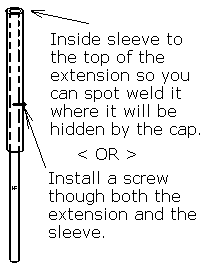 The end, corner and gate posts are a little trickier because there are no sleeves to fit that size. You must find a piece of pipe that will fit fairly snug on the interior of the post. Cut it about 2' long and use it as an inside sleeve. Cut the 1-2' extension to match the O.D. of the posts to extend and slide the extension over the sleeve. You can attach the extension in advance to the sleeve by drilling a hole and using a screw to secure the extension to the sleeve. We weld them on. The sleeve needs to extend into each side a minimum of 12".
You could use the above extension method on all posts. Next reinstall the top rail. Now replace the 4' high chain link with 5' or 6' high, depending on what you chose.
Although there are other ways to accomplish the same thing, including sliding larger diameter posts over the old ones the full height of the fence, this way is commonly used.
We have 1 5/8" sleeves and we can make the extensions for you. They can be shipped UPS, if you let us know the height you have and what you need. You must also measure the outside and inside diameters of all posts by removing the caps and measuring on the ends.
MORE INFORMATION:
1. Remove the chain link fabric. If you have 1 5/8" O.D. line posts, use sleeves
added on top of the posts as connectors. Cut a piece of 1 5/8" O.D. matching piece and slide it into the top. The length of that piece should be 1' long to add a foot and 2' to add two feet to the height.
The end, corner and gate posts are a little trickier because there are no sleeves to fit that size. You must find a piece of pipe that will fit fairly snug on the interior of the post. Cut it about 2' long and use it as an inside sleeve. Cut the 1-2' extension to match the O.D. of the posts to extend and slide the extension over the sleeve. You can attach the extension in advance to the sleeve by drilling a hole and using a screw to secure the extension to the sleeve. We weld them on. The sleeve needs to extend into each side a minimum of 12".
You could use the above extension method on all posts. Next reinstall the top rail. Now replace the 4' high chain link with 5' or 6' high, depending on what you chose.
Although there are other ways to accomplish the same thing, including sliding larger diameter posts over the old ones the full height of the fence, this way is commonly used.
We have 1 5/8" sleeves and we can make the extensions for you. They can be shipped UPS, if you let us know the height you have and what you need. You must also measure the outside and inside diameters of all posts by removing the caps and measuring on the ends.
MORE INFORMATION:
How do I fix a sagging gate?
Question:
My son has a sagging gate across his entry way and I would like to have information in pulling the sag out of the gate. The gate is approximately 10-12 feet wide and about four feet high and drags on the swinging side. I have suggested using a six-strand wire connected in the center with a turnbuckle. the wire secured on the end that drags and diagonally to the top of the gate. When he turns the turnbuckle the wire(s) will lift the dragging in as he shortens the diagonal wire(s). Will this answer his problem?????
Salisbury , NC
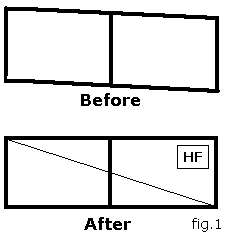 You hit the problem right squarely on the head. It's called a diagonal truss.
(fig 1) Most hi-tensile light gauge wire will work. Hi-tensile simply means it can stretch a long way before it snaps. A lot of hardware stores sell what is commonly called a "non-sag gate kit" or something similar. We sell them also. Those typically use a wound, stranded cable instead of a wire. This type is used for wood gates normally. The hardware that comes with the kit is set up for wood. Replace the lag bolts with self tap screws or weld the steel plate fastener onto a steel gate.
You hit the problem right squarely on the head. It's called a diagonal truss.
(fig 1) Most hi-tensile light gauge wire will work. Hi-tensile simply means it can stretch a long way before it snaps. A lot of hardware stores sell what is commonly called a "non-sag gate kit" or something similar. We sell them also. Those typically use a wound, stranded cable instead of a wire. This type is used for wood gates normally. The hardware that comes with the kit is set up for wood. Replace the lag bolts with self tap screws or weld the steel plate fastener onto a steel gate.
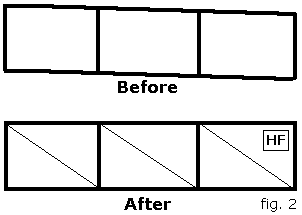 On heavy or large gates, we use a 3/8" diameter galvanized steel rod, threaded about 6-12" on the end. The plain end is welded or bent to loop though the top hinge side of the gate and the other end is passed through a hole in a turnbuckle that is nothing more than a "L" shaped steel piece fastened to the low sagging corner. A nut is placed on the threaded rod. As it is tightened, the gate rises.
(fig 2) On very large gates (over 18'), several trusses are placed, if needed. The first starts at the top, hinge side and secures at the bottom of the first vertical brace. The second fastens at the top of that vertical brace and goes to the bottom of the next vertical brace. And so it goes until each section of the gate has it's own truss. Each truss can be tightened individually so the gate does not have a chance to sag in the center. Only one truss would lift the end, but the center could sag.
On heavy or large gates, we use a 3/8" diameter galvanized steel rod, threaded about 6-12" on the end. The plain end is welded or bent to loop though the top hinge side of the gate and the other end is passed through a hole in a turnbuckle that is nothing more than a "L" shaped steel piece fastened to the low sagging corner. A nut is placed on the threaded rod. As it is tightened, the gate rises.
(fig 2) On very large gates (over 18'), several trusses are placed, if needed. The first starts at the top, hinge side and secures at the bottom of the first vertical brace. The second fastens at the top of that vertical brace and goes to the bottom of the next vertical brace. And so it goes until each section of the gate has it's own truss. Each truss can be tightened individually so the gate does not have a chance to sag in the center. Only one truss would lift the end, but the center could sag.
MORE INFORMATION: How To Build A Chain Link Fence (PDF)
You hit the problem right squarely on the head. It's called a diagonal truss.
(fig 1) Most hi-tensile light gauge wire will work. Hi-tensile simply means it can stretch a long way before it snaps. A lot of hardware stores sell what is commonly called a "non-sag gate kit" or something similar. We sell them also. Those typically use a wound, stranded cable instead of a wire. This type is used for wood gates normally. The hardware that comes with the kit is set up for wood. Replace the lag bolts with self tap screws or weld the steel plate fastener onto a steel gate.
On heavy or large gates, we use a 3/8" diameter galvanized steel rod, threaded about 6-12" on the end. The plain end is welded or bent to loop though the top hinge side of the gate and the other end is passed through a hole in a turnbuckle that is nothing more than a "L" shaped steel piece fastened to the low sagging corner. A nut is placed on the threaded rod. As it is tightened, the gate rises.
(fig 2) On very large gates (over 18'), several trusses are placed, if needed. The first starts at the top, hinge side and secures at the bottom of the first vertical brace. The second fastens at the top of that vertical brace and goes to the bottom of the next vertical brace. And so it goes until each section of the gate has it's own truss. Each truss can be tightened individually so the gate does not have a chance to sag in the center. Only one truss would lift the end, but the center could sag.
MORE INFORMATION: How To Build A Chain Link Fence (PDF)
Why do the tension band bolt holes not line up properly when I install my tension bands?
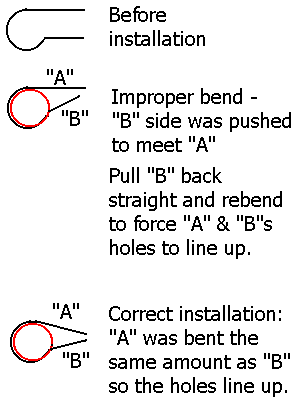 It could be that the band bolt holes are incorrectly made, but if the problem persists with all of the bands, you are probably not installing the band properly. It is best to install the band by sliding the band down over the post to avoid bending it out of shape when you force it around the post by pushing it on from the side of the post. Some bands, like heavy flat or the beveled type are very rigid and the act of pushing it onto the post from the side is worse than with a light-weight flat type band.
Even if you slide the band down from the top of the post, the bands may need a slight squeezing to force the ends of the bands close enough for installing the bolt. In fact, it is a lot easier to squeeze all bands as you install them to make it easier to get the bolt and nut on later.
It is important to squeeze the ends together properly. I once worked with an installer who could put a band in the palm of one hand and strike it with the other hand in such a way as to force the two ends together just perfectly, before he slid them onto the post. Of course, by now he must have carpal tunnel so bad that he can't clap his hands together at all.
I opt for the easier way of installing the band first and squeezing them with my bare hands just properly to force the two ends together and at the same time lining up the bolt holes. The key is to bend both ends at the same time. The tendency is to bend one side more than the other and that's when the problem is created.
The illustration shows the most common improper bending result and the correct bend.
Heavy duty bands are hard to "bare hand" so I use a pair of pliers. First squeeze the ends together with the pliers. This will deform the band incorrectly as shown. Next place one end of the pliers in the hole on the "B" side and the other end of the pliers on the very end of the "A" side. By squeezing carefully, you can 'pull' the "B" side over to the end of the "A" side at the same time lining up the bolt holes. Cool huh?
You will need a good pair of fence pliers that are large enough to do the job and just pointy enough to fit into the bolt hole. Guess what, we sell them. The 10" pliers are the best for the job.
MORE INFORMATION: How To Build A Chain Link Fence (PDF)
Can I locate my dog house outside of the dog kennel so the dog does not use the house as a ladder to escape?
Yes, you can cut a hole in chain link fence.
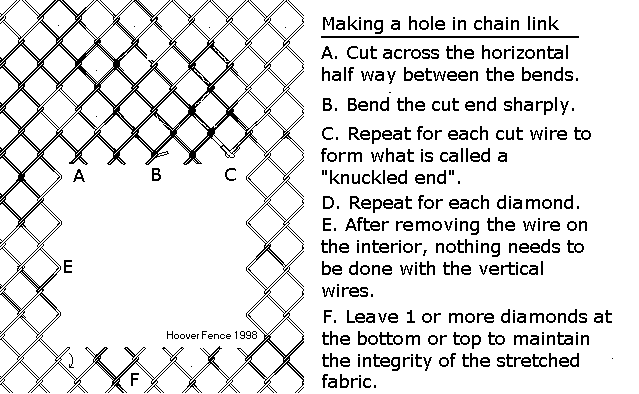
It is easy to cut any shape hole desired. Just make sure you leave as many full diamonds above and below the hole to keep the chain link stretched tight. The illustration below shows how to cut the wire and bend the ends into 'knuckles' so the sharp ends are not left exposed.
If the purpose of the hole is for a dog house, staple the chain link onto the dog house with regular fence staples. If this is not fancy enough for you, cut strips of wood or steel and screw them over the fabric ends to cover the ends of the wire. This also will protect the dog from getting caught on the chain link when he needs to exit in a hurry. By using screws, you can easily take them out, if necessary to change or clean the dog house.
MORE INFORMATION: How To Build A Chain Link Fence (PDF)
How To Cut A Hole In Chain Link Fence
There could be many reasons to need to cut a permanent hole through a chain link fence. You may need to pass a pipe through the fence. Another common reason is to allow an opening in a dog kennel panel so the dog can enter his dog house, which is located outside the enclosure.It is easy to cut any shape hole desired. Just make sure you leave as many full diamonds above and below the hole to keep the chain link stretched tight. The illustration below shows how to cut the wire and bend the ends into 'knuckles' so the sharp ends are not left exposed.
If the purpose of the hole is for a dog house, staple the chain link onto the dog house with regular fence staples. If this is not fancy enough for you, cut strips of wood or steel and screw them over the fabric ends to cover the ends of the wire. This also will protect the dog from getting caught on the chain link when he needs to exit in a hurry. By using screws, you can easily take them out, if necessary to change or clean the dog house.
MORE INFORMATION: How To Build A Chain Link Fence (PDF)
I do not know how to install a butt hinge. What keeps the gate from sliding down?
The gate frame pivots inside the butt hinge. You are wondering what grips the frame and keeps it from sliding through until it hits the ground.
There are three ways to hang a gate on butt hinges. One is to install the top hinge all the way into the top corner of the gate so the horizontal on the gate prevents the gate frame from sliding through the hinges.
Another way is to allow a 2-1/2" long leg on the hinge side of the gate vertical member that extends below the corner of the gate. The bottom hinge would then prevent the gate from sliding to the ground when the bottom horizontal member of the gate rests upon the butt hinge.
The third way is to use a 180 degree attachment. This fitting bolts firmly to the gate frame, like a normal female part of a hinge. It has a socket that fits into the butt hinge. This could just about double the price of the hinge set, but it also adds the ability of opening the gate 180 degrees in one direction only. Without it, the gate will open 90 degrees plus a little in either direction.
I hate installing 180 degree attachments, because it takes more than twice as long fussing with getting the angles right so the gate closes evenly with the other. The advantage is that 180 degree attachments can be adjusted with the butt hinge to vary the space between the post and gate and make up for a gate that doesn't fit exactly. I always carried a set on my truck to fix the new gate that was welded slightly too small or too big.
You will have to cock the butt hinge in the direction you want to swing the gate 180 degrees when using the 180 attachment. That's why they are tricky to install. How much angle? Hint: put the 180 attachment in the butt hinge before installing it on the gate. Adjust the angle of the butt hinge until there is a 2" space between the place where the gate frame passes through the 180 attachment and the gate post. If the gate was made the right size, it should only require the slightest adjustment at the hinges. It's the double swing gates that are the trickiest, but if you follow this procedure, you won't be too far off.
By the way, there are ring bearings that can be used with either the 180 attachments or with the butt hinge alone. These rings fit the gate frame or the 180 attachment where the butt hinge or 180 attachment rub. Only one is needed on the load bearing butt hinge. The load bearing butt hinge is the one that is holding the weight of the gate. I seldomly used the bearings, except for automated gates.
MORE INFORMATION: How To Build A Chain Link Fence (PDF)
There are three ways to hang a gate on butt hinges. One is to install the top hinge all the way into the top corner of the gate so the horizontal on the gate prevents the gate frame from sliding through the hinges.
Another way is to allow a 2-1/2" long leg on the hinge side of the gate vertical member that extends below the corner of the gate. The bottom hinge would then prevent the gate from sliding to the ground when the bottom horizontal member of the gate rests upon the butt hinge.
The third way is to use a 180 degree attachment. This fitting bolts firmly to the gate frame, like a normal female part of a hinge. It has a socket that fits into the butt hinge. This could just about double the price of the hinge set, but it also adds the ability of opening the gate 180 degrees in one direction only. Without it, the gate will open 90 degrees plus a little in either direction.
I hate installing 180 degree attachments, because it takes more than twice as long fussing with getting the angles right so the gate closes evenly with the other. The advantage is that 180 degree attachments can be adjusted with the butt hinge to vary the space between the post and gate and make up for a gate that doesn't fit exactly. I always carried a set on my truck to fix the new gate that was welded slightly too small or too big.
You will have to cock the butt hinge in the direction you want to swing the gate 180 degrees when using the 180 attachment. That's why they are tricky to install. How much angle? Hint: put the 180 attachment in the butt hinge before installing it on the gate. Adjust the angle of the butt hinge until there is a 2" space between the place where the gate frame passes through the 180 attachment and the gate post. If the gate was made the right size, it should only require the slightest adjustment at the hinges. It's the double swing gates that are the trickiest, but if you follow this procedure, you won't be too far off.
By the way, there are ring bearings that can be used with either the 180 attachments or with the butt hinge alone. These rings fit the gate frame or the 180 attachment where the butt hinge or 180 attachment rub. Only one is needed on the load bearing butt hinge. The load bearing butt hinge is the one that is holding the weight of the gate. I seldomly used the bearings, except for automated gates.
MORE INFORMATION: How To Build A Chain Link Fence (PDF)
What size gate is recommended for my specific application?
Choosing the Size of Gate for Your Fence Project:
In general, gate widths should be kept to a minimum. Regardless of if you are shopping for a gate for a small backyard fence or a commercial facility, choose a gate size based on its use. For residential use, you will need to consider and possibly check the measurements on the following:Lawn Care Maintenance Equipment and Pedestrian Gates: Typically 3' wide gates are sufficient for push mowers; riding lawnmowers usually require 4-5' wide openings. Wheelbarrows can require a 4' wide opening. Always measure these items and any others you want to push, pull, and carry through the gates. Also keep in mind doors in most houses are only 36" wide. All sorts of large cumbersome items can fit through these openings.
Driveway Gates and Vehicle Access Gates: Consider that most highways are only approx. 10' wide. People have no trouble driving 65 MPH+ on a 10' wide road. Most driveway gates are 10' or 12' wide, however some are larger. Larger driveway gates are often installed because a vehicle will not or cannot pull in straight; vehicles will be turning as they drive through the gate opening. This is especially important for vehicles pulling trailers and boats.
Semi-Annual Traffic: Frequently our customers have wanted larger gates for the septic tank truck or to be prepared in case they need to get a backhoe in for repair. This is excellent forethought, however a large gate can be unnecessary and add extra cost to your project. In such instances where a gate only needs accessed a couple times a year, consider installing 2-3 removable sections of fence. This can be done at a modest cost and it is not any more laborious than installing the fence to begin with. There is more than one way to do this, the method is dependent on the style of fence being installed. For aluminum and vinyl fence, it is frequently done by cementing sleeves in the ground flush with grade in lieu of the posts. These sleeves, which can be made from galvanized steel, aluminum, or treated lumber, are approx. 18" long. They are slightly larger than the fence posts so that the fence posts can slide into them. Shim post(s) if necessary. Once fence post sleeves are cemented in the ground, install the fence as usual only for one or two posts, slide these into the sleeves versus cementing in ground. To remove section of fence, remove the horizontal rails, remove section fence, and remove post.
To sum, gates are the only part of the fence which move. They are also the only part of the fence which tends to get abused. Years of experience have taught us that the smaller the gate - the better. Smaller gates will last longer, be less finicky years later, and cheaper to replace should they ever fail or get damaged. As far as expense is concerned, in many case it makes very little difference. For example, if you need 10' of fence with a man gate, you can order 7' of fence with a 3' gate or 6' of fence and a 4' gate - the net result is you need to cover 10'; you can install less gate and more fence or vice versus. Aluminum and vinyl fence sections are sold in sections, 6', 7-1/2', and 8' wide depending on style. Plan locations and widths of gates to eliminate waste and cutting sections down to size.
What are the differences between the various grades of chain link fence and what would you recommend for a baseball field fence?
Applicable Products:
Chain link fence.
Reply: As you may have noticed, chain link fabric, framework, and fittings are all available in various grades, gauges, and with different types of finishes. Briefly, I will attempt to differentiate between a few of the options.
Residential Grades "Good/ Light Duty": Framework (terminal posts, line posts, and top rail) The minimum we carry in framework is .065 wall thickness (16 ga.) tubing. This is typically the minimum any professional fence company would offer. There are cheaper options on the market, however with all the hard work involved with installing fences, the cheaper, thinner pipe is hardly worth the effort. A cheaper pipe for use for framework for example is a .035 wall thickness. This is typically found at do-it-yourself type stores and chains nationwide. Most of this type framework one can bend over one's knee. We suggest 2-1/2" (2-3/8" actual) O.D. (outside diameter) for terminal posts, i.e. end, corner, and gate posts. For line posts, or the intermediate posts as they are sometimes called, we recommend 1-5/8" O.D. posts for up to 5' high fences. 6' high chain link fences should be installed with a 2" O.D. . 1-3/8" O.D. top rail is sufficient for most residential jobs. We typically do not recommend tubing for fences higher than 6'.
Residential Chain Link Fabric/ Mesh/ Wire "Good/ Light Duty": Most do-it-yourself centers offer a 12 or 12-1/2 gauge chain link fabric. Typically this has a 2-1/2" mesh. We offer at minimum an 11 ga. fabric which has an approx. 2" mesh. With chain link wire, the smaller the number of gauge - the thicker, stronger it is. Although a 1-2 gauge difference does not appear to be much, experience would teach you otherwise. Not only is one stronger than the other, but the galvanized coating is much better on thicker wire. The thicker the wire, the longer it may be hot dipped in zinc without melting which creates the rust prohibiting galvanized coating. This principle also applies to the pipe framework. The cost difference between what one might find at a do-it-yourself center and what we carry isn't much and well worth the investment.
Residential/ Light Commercial Framework "Better/ Medium Duty": We recommend HF20 framework for residential customers wanting a higher quality fence which will last longer. It is also a cost efficient solution for light duty commercial use. HF20 framework is 30% stronger and 20% lighter than mill structural pipe. It also has a far superior finish than domestic or import mill pipe. We do also carry import and domestic structural mill pipe (schedule 20, 40 for example). The savings may be approx. 10% and is fine for fence use. Many of our customers who need to fence miles may prefer domestic pipe for economical reasons. The diameters for posts and top rail are the same as above. However you may use HF20 for heights above 6'. It would be unusual to use HF20 for heights above 8'. 7' and 8' high fences will often feature a 3" (2-7/8" actual) terminal post and 2-1/2" (2-3/8'' actual) line posts.
Residential/ Light Commercial Chain Link Fabric/ Mesh/ Wire "Best/ Heavy Duty": 9 gauge is the preferred gauge for use with finer residential and light commercial use. This is typically what one will find at public facilities, airports, and commercial locations.
Commercial Framework "Best/ Heavy Duty": HF40 framework is far superior to any and all previously mentioned framework options. It is advertised as being 30% stronger and 20% lighter than mill structural pipe.
Additional Notes Pertaining to Baseball/ Softball Field Fences: We suggest all HF40 pipe for backstops. 'Hanging Canopies' may use a lighter gauge to cut down on weight. Fabric should all be 9 gauge minimum to withstand public and sporting abuse. It is not unusual for the bottom portion of backstops which receive the majority of abuse to utilize stronger 6 ga. mesh. The diameter of posts to use will depend on height of backstop and other structural details. We would quote a 20' backstop with 4" terminal posts. All horizontal rails and bracing should be 1-5/8" diameter. More information on typical backstops may be found here: Baseball & Softball Fence. Sideline fencing is often 6' high or taller. Dugouts and player benches are often located here. Many quality fields will have mid and bottom rails for the sideline fences for additional strength. Outfield fences rarely have mid or bottom rails. Many are only 4' high and most have bottom tension wire. Knuckle x knuckle chain link fabric is the norm for public facilities. This simply means the top and bottom of the mesh is bent over "knuckled" so that sharp ends are not exposed. Knuckle x twist means the mesh will have bent over on one end and twisted to a point on the other and is typically used for security fences. The twist portion may be installed up or down. Check out this page for more info and a simple b/w picture: 9 Gauge x 2" Chain Link Fence Fabric, Galvanized . Chain link has never been called 'high-tensile' to my knowledge. 'High-Tensile' is a type of agricultural fence which is usually one single or multiple wires strung horizontally for cows and horses. Many simple tie white scarves to this fence so that animals can see it. Some styles of high tensile have a white PVC band-like material to them. I doubt you will be needing this for a baseball field! To conclude, HF40 is the fence industry's premium pipe. If your city's budget permits, we highly recommend using HF40 for all the framework. Using 2-1/2" terminals and 1-5/8" or 2" posts for the 4' high fence is sufficient. Use 3" terminals on the 8' high fence and 2-1/2" line posts for the best performance. 9ga. galvanized wire is the norm, knuckle x knuckle (abbreviated as KXK). Consider 6 ga. for the bottom portion of the backstop, mid rails for sideline fences if they exist, and bottom wire for outfield fences. Larger gates will have larger gate posts. There is very little price difference between a 10' and 12' gate; most of the cost is associated with labor. Assuming this is a double gate, 8' high, the normal 3" O.D. posts will suffice.
Hopefully this has helped differentiate between various grades of chain link and framework on the market.
Reply: As you may have noticed, chain link fabric, framework, and fittings are all available in various grades, gauges, and with different types of finishes. Briefly, I will attempt to differentiate between a few of the options.
Residential Grades "Good/ Light Duty": Framework (terminal posts, line posts, and top rail) The minimum we carry in framework is .065 wall thickness (16 ga.) tubing. This is typically the minimum any professional fence company would offer. There are cheaper options on the market, however with all the hard work involved with installing fences, the cheaper, thinner pipe is hardly worth the effort. A cheaper pipe for use for framework for example is a .035 wall thickness. This is typically found at do-it-yourself type stores and chains nationwide. Most of this type framework one can bend over one's knee. We suggest 2-1/2" (2-3/8" actual) O.D. (outside diameter) for terminal posts, i.e. end, corner, and gate posts. For line posts, or the intermediate posts as they are sometimes called, we recommend 1-5/8" O.D. posts for up to 5' high fences. 6' high chain link fences should be installed with a 2" O.D. . 1-3/8" O.D. top rail is sufficient for most residential jobs. We typically do not recommend tubing for fences higher than 6'.
Residential Chain Link Fabric/ Mesh/ Wire "Good/ Light Duty": Most do-it-yourself centers offer a 12 or 12-1/2 gauge chain link fabric. Typically this has a 2-1/2" mesh. We offer at minimum an 11 ga. fabric which has an approx. 2" mesh. With chain link wire, the smaller the number of gauge - the thicker, stronger it is. Although a 1-2 gauge difference does not appear to be much, experience would teach you otherwise. Not only is one stronger than the other, but the galvanized coating is much better on thicker wire. The thicker the wire, the longer it may be hot dipped in zinc without melting which creates the rust prohibiting galvanized coating. This principle also applies to the pipe framework. The cost difference between what one might find at a do-it-yourself center and what we carry isn't much and well worth the investment.
Residential/ Light Commercial Framework "Better/ Medium Duty": We recommend HF20 framework for residential customers wanting a higher quality fence which will last longer. It is also a cost efficient solution for light duty commercial use. HF20 framework is 30% stronger and 20% lighter than mill structural pipe. It also has a far superior finish than domestic or import mill pipe. We do also carry import and domestic structural mill pipe (schedule 20, 40 for example). The savings may be approx. 10% and is fine for fence use. Many of our customers who need to fence miles may prefer domestic pipe for economical reasons. The diameters for posts and top rail are the same as above. However you may use HF20 for heights above 6'. It would be unusual to use HF20 for heights above 8'. 7' and 8' high fences will often feature a 3" (2-7/8" actual) terminal post and 2-1/2" (2-3/8'' actual) line posts.
Residential/ Light Commercial Chain Link Fabric/ Mesh/ Wire "Best/ Heavy Duty": 9 gauge is the preferred gauge for use with finer residential and light commercial use. This is typically what one will find at public facilities, airports, and commercial locations.
Commercial Framework "Best/ Heavy Duty": HF40 framework is far superior to any and all previously mentioned framework options. It is advertised as being 30% stronger and 20% lighter than mill structural pipe.
Additional Notes Pertaining to Baseball/ Softball Field Fences: We suggest all HF40 pipe for backstops. 'Hanging Canopies' may use a lighter gauge to cut down on weight. Fabric should all be 9 gauge minimum to withstand public and sporting abuse. It is not unusual for the bottom portion of backstops which receive the majority of abuse to utilize stronger 6 ga. mesh. The diameter of posts to use will depend on height of backstop and other structural details. We would quote a 20' backstop with 4" terminal posts. All horizontal rails and bracing should be 1-5/8" diameter. More information on typical backstops may be found here: Baseball & Softball Fence. Sideline fencing is often 6' high or taller. Dugouts and player benches are often located here. Many quality fields will have mid and bottom rails for the sideline fences for additional strength. Outfield fences rarely have mid or bottom rails. Many are only 4' high and most have bottom tension wire. Knuckle x knuckle chain link fabric is the norm for public facilities. This simply means the top and bottom of the mesh is bent over "knuckled" so that sharp ends are not exposed. Knuckle x twist means the mesh will have bent over on one end and twisted to a point on the other and is typically used for security fences. The twist portion may be installed up or down. Check out this page for more info and a simple b/w picture: 9 Gauge x 2" Chain Link Fence Fabric, Galvanized . Chain link has never been called 'high-tensile' to my knowledge. 'High-Tensile' is a type of agricultural fence which is usually one single or multiple wires strung horizontally for cows and horses. Many simple tie white scarves to this fence so that animals can see it. Some styles of high tensile have a white PVC band-like material to them. I doubt you will be needing this for a baseball field! To conclude, HF40 is the fence industry's premium pipe. If your city's budget permits, we highly recommend using HF40 for all the framework. Using 2-1/2" terminals and 1-5/8" or 2" posts for the 4' high fence is sufficient. Use 3" terminals on the 8' high fence and 2-1/2" line posts for the best performance. 9ga. galvanized wire is the norm, knuckle x knuckle (abbreviated as KXK). Consider 6 ga. for the bottom portion of the backstop, mid rails for sideline fences if they exist, and bottom wire for outfield fences. Larger gates will have larger gate posts. There is very little price difference between a 10' and 12' gate; most of the cost is associated with labor. Assuming this is a double gate, 8' high, the normal 3" O.D. posts will suffice.
Hopefully this has helped differentiate between various grades of chain link and framework on the market.
What gauge chain link fence do you recommend for dog kennels?
Applicable Products:
Chain link fence.
Reply: 11 gauge fabric is the thinnest fabric we use for residential chain link projects. Although there are lighter gauges available, we have found this to be the lightest which holds up well. 9 gauge is a heavier fabric and would require a heavier framework to support it, HF20 or HF40 for example. Not only is this fabric stronger and will resist bending and chewing by animals, it also has a better, longer lasting galvanized finish. This is because a heavier wire or pipe may be 'hot-dipped' longer without melting in the galvanizing solution. It will not rust as soon and this is one advantage many people do not realize.
Reply: 11 gauge fabric is the thinnest fabric we use for residential chain link projects. Although there are lighter gauges available, we have found this to be the lightest which holds up well. 9 gauge is a heavier fabric and would require a heavier framework to support it, HF20 or HF40 for example. Not only is this fabric stronger and will resist bending and chewing by animals, it also has a better, longer lasting galvanized finish. This is because a heavier wire or pipe may be 'hot-dipped' longer without melting in the galvanizing solution. It will not rust as soon and this is one advantage many people do not realize.
Can I paint a chain link fence?
Applicable Products:
Chain link fence.
Reply: As you might guess, we are in favor of replacing older chain link fences which have lost their 'luster', however I have seen many chain link fences which have been painted. I would guess that it is best to paint them with a sprayer or rollers, though we have no experience with painting fences, only replacing them. As far as the type of paint, we recommend checking with a paint dealer/ specialist for options. Paint and applying paint is not our specialty. There are a few things about galvanized finishes for chain link fences that I will point out though. Many of our customers have inquired about painting them since vinyl posts, framework, and fittings can double project costs. Colored vinyl fabric on galvanized framework is not much more expensive than an all galvanized job, however once one wants the framework coated as well, it often doubles the cost. New galvanized materials should not be painted immediately. Depending on the specific type of material used, much of it has a slight shine or gloss to it. Technically, the shine needs removed before painting in order for paint to adhere properly. This can be done in a few different ways. You may apply an acidic solution to it and a light sanding to prep the material to accept paint or let it naturally weather a few years. We apply a chemical solution to an occasional custom galvanized tubular frame which is then sent to a powder coat facility for custom gates.
Reply: As you might guess, we are in favor of replacing older chain link fences which have lost their 'luster', however I have seen many chain link fences which have been painted. I would guess that it is best to paint them with a sprayer or rollers, though we have no experience with painting fences, only replacing them. As far as the type of paint, we recommend checking with a paint dealer/ specialist for options. Paint and applying paint is not our specialty. There are a few things about galvanized finishes for chain link fences that I will point out though. Many of our customers have inquired about painting them since vinyl posts, framework, and fittings can double project costs. Colored vinyl fabric on galvanized framework is not much more expensive than an all galvanized job, however once one wants the framework coated as well, it often doubles the cost. New galvanized materials should not be painted immediately. Depending on the specific type of material used, much of it has a slight shine or gloss to it. Technically, the shine needs removed before painting in order for paint to adhere properly. This can be done in a few different ways. You may apply an acidic solution to it and a light sanding to prep the material to accept paint or let it naturally weather a few years. We apply a chemical solution to an occasional custom galvanized tubular frame which is then sent to a powder coat facility for custom gates.
Is cementing chain link posts necessary or are there alternatives?
Applicable Products:
Chain link fence.
Reply: We have always preferred cementing fence posts. However anchors have become quite popular and some are advertised as being stronger than concrete installations. I have not had enough experience with the anchors to offer you experienced advice comparing the two. One option would be our Oz-Post Drive in Post Anchors for Round Posts. Another common option for line posts are the Spade Type Chain Link Fence Post Anchors.
Reply: We have always preferred cementing fence posts. However anchors have become quite popular and some are advertised as being stronger than concrete installations. I have not had enough experience with the anchors to offer you experienced advice comparing the two. One option would be our Oz-Post Drive in Post Anchors for Round Posts. Another common option for line posts are the Spade Type Chain Link Fence Post Anchors.
How do I construct a fence going over obstacles?
Applicable Products:
Chain link fence.
Reply: The proper installation of chain link over such obstacles as you mentioned will depend on a few variables you did not provide details on such as the footage between and over obstacles. If you simply need to span a few feet over a cement of asphalt island/ curb, it is probably easiest to set posts as if those obstacles weren't there and simple avoid having to set posts in concrete or asphalt. When you stretch the fence, simply trim the bottom of the fence around the obstacles. If the obstacles are larger and you must set posts in them, you most likely want to install terminal posts at the base of each obstacle. These terminal posts will allow you to connect the fence fabric separately for each height. This will provide the flexibility you may need for various heights of fence.
Reply: The proper installation of chain link over such obstacles as you mentioned will depend on a few variables you did not provide details on such as the footage between and over obstacles. If you simply need to span a few feet over a cement of asphalt island/ curb, it is probably easiest to set posts as if those obstacles weren't there and simple avoid having to set posts in concrete or asphalt. When you stretch the fence, simply trim the bottom of the fence around the obstacles. If the obstacles are larger and you must set posts in them, you most likely want to install terminal posts at the base of each obstacle. These terminal posts will allow you to connect the fence fabric separately for each height. This will provide the flexibility you may need for various heights of fence.
What is the proper way to stretch a mason line when installing fence?
Applicable Products:
Chain link fence.
Reply: When stretching a mason line for setting fence posts, do so as low as possible to the ground, approx. 3-5". Wrap the string around stakes, wood or steel ones work well. This string is used to set the posts in a straight line only. This string is seldom used as a guide for depth of post or the post height. The correct way to set posts to the correct height depends on the styles of fence you are installing. With chain link fence, all posts are typically set in concrete one day; framework and fabric is installed later after the concrete has cured. One will need to make 'grade marks' on the posts with a marker. This is the depth marker for setting the posts. With galvanized fabric, make grade marks on terminal posts 2" taller than the height of fence. Line posts should be set 3" shorter than the height of fence to be installed. Subtract an extra 1/2" on line posts if you are stretching vinyl fabric as this has a tendency to shrink in height slightly as it is stretched. Concentrate on one length of fence at a time. Dig holes, fill with cement, and set all posts to these grade marks in the ground. Go to end of fence line and look across the tops of the posts. For uneven grades, you will see that the top of the posts follow the uneven grade since you set all posts equidistant from the ground surface, or grade. Typically one will need to fine tune these heights and this is simply done by sighting in the posts. Since top rail is set on top of the line posts, raise and lower line posts slightly to provide for a smooth transition between each post. Keep in mind anytime you lower a line post below the grade mark, the fence fabric will need trenched and buried. Likewise, the distance between the grade marks and the ground surface is how much space you will have underneath the fence. Often one will bury the fence a little in one spot and fill in under the fence in other spots in order to have the top rail run smoothly.
Reply: When stretching a mason line for setting fence posts, do so as low as possible to the ground, approx. 3-5". Wrap the string around stakes, wood or steel ones work well. This string is used to set the posts in a straight line only. This string is seldom used as a guide for depth of post or the post height. The correct way to set posts to the correct height depends on the styles of fence you are installing. With chain link fence, all posts are typically set in concrete one day; framework and fabric is installed later after the concrete has cured. One will need to make 'grade marks' on the posts with a marker. This is the depth marker for setting the posts. With galvanized fabric, make grade marks on terminal posts 2" taller than the height of fence. Line posts should be set 3" shorter than the height of fence to be installed. Subtract an extra 1/2" on line posts if you are stretching vinyl fabric as this has a tendency to shrink in height slightly as it is stretched. Concentrate on one length of fence at a time. Dig holes, fill with cement, and set all posts to these grade marks in the ground. Go to end of fence line and look across the tops of the posts. For uneven grades, you will see that the top of the posts follow the uneven grade since you set all posts equidistant from the ground surface, or grade. Typically one will need to fine tune these heights and this is simply done by sighting in the posts. Since top rail is set on top of the line posts, raise and lower line posts slightly to provide for a smooth transition between each post. Keep in mind anytime you lower a line post below the grade mark, the fence fabric will need trenched and buried. Likewise, the distance between the grade marks and the ground surface is how much space you will have underneath the fence. Often one will bury the fence a little in one spot and fill in under the fence in other spots in order to have the top rail run smoothly.
What can you tell me about vinyl coated chain link fence?
Applicable Products:
Chain link fence.
Reply: Hoover Fence Company sells extruded vinyl coated chain link fabric. What is extruded vinyl? In layman's terms, extruded vinyl, when cut with a knife, can be peeled off like a banana. However, it does not peel easily. That is what makes extruded different then bonded vinyl, which would have to be cut off completely, much like peeling a potato. Bonded costs more than extruded. We do not sell bonded vinyl fabrics. Note about gauges: The smaller the number, the heavier the fabric; henceforth 9ga. is heavier than 11ga.. We recommend 11ga. for residential jobs and 9ga. for commercial jobs. Vinyl coated chain link is sold by the finish gauge. 9 ga. chain link vinyl coated actually has a thinner inner steel wire. It is considered 9 gauge once it has been coated, although the inner steel wire is nearest 11 ga. Vinyl chain link fabric is available in black, green, brown and white.
Please note you may use our residential calculator for figuring quotes for chain link jobs using vinyl fabric. It is found here: Chain Link Calculator. This calculator will figure prices for a galvanized framework only, however you may choose vinyl coated fabric. The quote will be for vinyl coated chain link fabric and galvanized frame. If you would like everything vinyl coated or powder coated, i.e. framework, fittings, and gates, simply double your total price quoted. You will need to order by telephone for an all vinyl system. You may paint the framework, however paint usually does not adhere well on the new galvanized materials. Technically one should apply a chemical to all the galvanized parts first to 'rough' it up a bit and remove the shine. Paint will then adhere better. This can be a laborious task and is not very popular. Usually ordering an all vinyl system or a powder coated system is more practical.
Reply: Hoover Fence Company sells extruded vinyl coated chain link fabric. What is extruded vinyl? In layman's terms, extruded vinyl, when cut with a knife, can be peeled off like a banana. However, it does not peel easily. That is what makes extruded different then bonded vinyl, which would have to be cut off completely, much like peeling a potato. Bonded costs more than extruded. We do not sell bonded vinyl fabrics. Note about gauges: The smaller the number, the heavier the fabric; henceforth 9ga. is heavier than 11ga.. We recommend 11ga. for residential jobs and 9ga. for commercial jobs. Vinyl coated chain link is sold by the finish gauge. 9 ga. chain link vinyl coated actually has a thinner inner steel wire. It is considered 9 gauge once it has been coated, although the inner steel wire is nearest 11 ga. Vinyl chain link fabric is available in black, green, brown and white.
Please note you may use our residential calculator for figuring quotes for chain link jobs using vinyl fabric. It is found here: Chain Link Calculator. This calculator will figure prices for a galvanized framework only, however you may choose vinyl coated fabric. The quote will be for vinyl coated chain link fabric and galvanized frame. If you would like everything vinyl coated or powder coated, i.e. framework, fittings, and gates, simply double your total price quoted. You will need to order by telephone for an all vinyl system. You may paint the framework, however paint usually does not adhere well on the new galvanized materials. Technically one should apply a chemical to all the galvanized parts first to 'rough' it up a bit and remove the shine. Paint will then adhere better. This can be a laborious task and is not very popular. Usually ordering an all vinyl system or a powder coated system is more practical.
Do you sell baseball backstops?
Applicable Products:
Chain link fence.
Reply: Yes we do! We carry two sizes of baseball/softball backstops. One backstop is 12' high with a 6' canopy. The other is 16' high without a canopy. Both are sold as kits and contain all the parts needed to install the backstop. You can find these at this site: Baseball & Softball Fence. We supply everything you need except the tools, concrete and muscle power. Instructions are included online and also come in a PDF format to print out. Assembling a backstop is not a one-person job and not for the meek. See for yourself whether you or your team want to tackle a job this size.
Reply: Yes we do! We carry two sizes of baseball/softball backstops. One backstop is 12' high with a 6' canopy. The other is 16' high without a canopy. Both are sold as kits and contain all the parts needed to install the backstop. You can find these at this site: Baseball & Softball Fence. We supply everything you need except the tools, concrete and muscle power. Instructions are included online and also come in a PDF format to print out. Assembling a backstop is not a one-person job and not for the meek. See for yourself whether you or your team want to tackle a job this size.
Do you have hardware available for closing a chain link gate?
Question:
Do you have hardware available for closing a chain link gate? We have a chain link fence in our backyard. Our kids do a very poor job of keeping the gate closed. I estimate the gate to be roughly 4' wide and the fence / gate 5' tall. Is there a hinge or spring loaded gate closer on the market?
Applicable Products:
Chain link gates
Reply: We feature multiple products for self-closing chain link type gates. Here are a few links:
Good: Chain Link Gravity Self-Closing Hinge Set
Better: Round Post Hinge
Best: Add-on devices (use existing hinges):
Kant Slam
Gate Closers
Chain link index (view all parts)
Reply: We feature multiple products for self-closing chain link type gates. Here are a few links:
Good: Chain Link Gravity Self-Closing Hinge Set
Better: Round Post Hinge
Best: Add-on devices (use existing hinges):
Kant Slam
Gate Closers
Chain link index (view all parts)
How do you make a chain link gate self-closing? How do you make a chain link gate self-latching? How do you make a chain link gate self-locking?
Applicable Products:
Chain link gates
Reply: We offer a few fence and gate products to accomplish converting your existing chain links to self-closing.
You could first consider replacing the exisiting male and female hinges with self-closing hinges which compliment your current chain link fence. We have numerous products which will solve your dilemma:
Consider these Fence Products for Replacing your Exisiting Chain Link Gate Hinges with New Self-Closing Gate Hinges:
D&D Technologies Tru-Close Hinges:
Round Post Hinge
D&D Technologies Adjustable Tru-Close Hinges:
Tru-Close Mini-Multi Round Adjust Hinges
Heavy Duty Aluminum Self-Closing Gate Hinges:
Chain Link Spring Hinge
Self-Closing Gravity Gate Hinges (Two-Way):
Chain Link Gravity Self Closing Hinge
Self-Closing Gravity Gate Hinges (One-Way):
Chain Link Gravity Self Closing Hinge One Way
Consider these Fence Products for Adding a Closing Mechanism to your Exisiting Chain Link Gate and using Existing Gate Hardware:
Spring-Loaded Mechanism:
Aluminum Chain Link Gate Closers
Kant-Slam Gate Closer (Hydraulic Gate Closer):
Kant Slam
Locinox Samson 2 (Hydraulic Gate Closer):
Samson 2 Gate Closer
In order to make your gates truly "self-locking", you will need new hardware as there is no way to make a drop rod or standard chain link fork latch self-locking. Although there are many fence products available to make your gates lockable (either with a built in key cylinder or with padlock), few enable your gates to be truly self-locking.
A fence product available to make your gate truly self-locking is the following:
Locinox Mechanical Code Gate Lock:
Vinci Mechanical Code Gate Lock
You may also consider adding an electric gate lock or magnetic gate lock which will enable your gates to be truly self-locking such as those found here:
GTO Bulldog FM145 Gate Lock:
Bulldog Electric Gate Lock
Securitron Model 62 Gate Lock:
Magnalock M62 Magnetic Lock
Most above fence and gate products adapt well to use on a variety of single pedestrian gates, i.e. chain link gates, ornamental gates, and more. Typically, when you wish to use these pieces of hardware on a double gate, one leaf of the double gate would be pinned to the ground on the latch side with a drop rod. This gate leaf is typically stationary and the other gate would self-close, self-latch, and sometimes self-lock to it.
The only way to install or remodel an exisiting double gate to be truly self-closing and self-locking is to automate the double gate. You may install nearly any of our gate operators with an electric or magnetic lock designed for single, double, swinging, or sliding gates to create a truly self-closing, latching, and locking gate.
View our assortment of gate operators and accessories here
Chain Link Fence Parts Catalog
Reply: We offer a few fence and gate products to accomplish converting your existing chain links to self-closing.
You could first consider replacing the exisiting male and female hinges with self-closing hinges which compliment your current chain link fence. We have numerous products which will solve your dilemma:
Consider these Fence Products for Replacing your Exisiting Chain Link Gate Hinges with New Self-Closing Gate Hinges:
D&D Technologies Tru-Close Hinges:
Round Post Hinge
D&D Technologies Adjustable Tru-Close Hinges:
Tru-Close Mini-Multi Round Adjust Hinges
Heavy Duty Aluminum Self-Closing Gate Hinges:
Chain Link Spring Hinge
Self-Closing Gravity Gate Hinges (Two-Way):
Chain Link Gravity Self Closing Hinge
Self-Closing Gravity Gate Hinges (One-Way):
Chain Link Gravity Self Closing Hinge One Way
Consider these Fence Products for Adding a Closing Mechanism to your Exisiting Chain Link Gate and using Existing Gate Hardware:
Spring-Loaded Mechanism:
Aluminum Chain Link Gate Closers
Kant-Slam Gate Closer (Hydraulic Gate Closer):
Kant Slam
Locinox Samson 2 (Hydraulic Gate Closer):
Samson 2 Gate Closer
In order to make your gates truly "self-locking", you will need new hardware as there is no way to make a drop rod or standard chain link fork latch self-locking. Although there are many fence products available to make your gates lockable (either with a built in key cylinder or with padlock), few enable your gates to be truly self-locking.
A fence product available to make your gate truly self-locking is the following:
Locinox Mechanical Code Gate Lock:
Vinci Mechanical Code Gate Lock
You may also consider adding an electric gate lock or magnetic gate lock which will enable your gates to be truly self-locking such as those found here:
GTO Bulldog FM145 Gate Lock:
Bulldog Electric Gate Lock
Securitron Model 62 Gate Lock:
Magnalock M62 Magnetic Lock
Most above fence and gate products adapt well to use on a variety of single pedestrian gates, i.e. chain link gates, ornamental gates, and more. Typically, when you wish to use these pieces of hardware on a double gate, one leaf of the double gate would be pinned to the ground on the latch side with a drop rod. This gate leaf is typically stationary and the other gate would self-close, self-latch, and sometimes self-lock to it.
The only way to install or remodel an exisiting double gate to be truly self-closing and self-locking is to automate the double gate. You may install nearly any of our gate operators with an electric or magnetic lock designed for single, double, swinging, or sliding gates to create a truly self-closing, latching, and locking gate.
View our assortment of gate operators and accessories here
Chain Link Fence Parts Catalog
How much does it cost to have chain link fence installed?
Applicable Products: Chain Link Fence and Other Types Fencing
Reply: Thank you for writing HooverFence.com. Fence installation and labor costs for installing fence can vary significantly due to the following variables for a fencing contractor:
For these reasons and others, we have found it difficult to estimate fence installation labor prices across the country. Costs of living and average rates also differ significantly across the country. Many other trades such as carpentry, roofing, and the electrical or plumbing trades could arguably have more defined fixed costs. Often, their work is confined to a fixed building with all work exposed for estimating. They can usually pull their work vehicles right up to a building and perform their tasks fairly predictably.
Fencers, on the other hand, often have to guess at what's below the ground surface and numerous other variables to define the time involved with installing a fence. Inclimate weather, buried utility lines, and buried hard surfaces can sometimes make a job which looked profitable, barely doable.
We recommend working only with qualified and experienced contractors. Check references and reports with the Better Business Bureau. Also, be sure they are insured properly for liability and worker's compensation. Experienced contractors can usually provide a fair, reasonable, and accurate estimate upon review of the fence project location. Be aware that cheap fences and cheap fence installations can cost you more in the long run with repairs and replacement costs. A fence should be something to be installed with longevity in mind. They are not always easy to install and they are even more difficult to tear down and reinstall, if the wrong materials and techniques are used to install it.
Fortunately, HooverFence.com can provide free and accurate 'to-the-nut-and-bolt' estimates for Chain Link Fence, Ornamental Fence, Wood Fence, Vinyl Fenceand Railing projects. This provides you with one finite and fixed cost to work with. You may simply call a fence professional with measurements, send us an email, or fax us the description and fence layout. Once we have a material cost we can usually provide a range of costs you could expect if you choose to hire someone to install our products. We also can estimate the 'normal and ideal' amount of time required to install our fence products.
Lastly, we do offer free installation manuals for nearly every style and type of fence, or fence product we offer. You may review these before purchasing fence from us and call or email us if you have questions. We are available before, during, and after your installation for technical support, installation tips and tricks.
Reply: Thank you for writing HooverFence.com. Fence installation and labor costs for installing fence can vary significantly due to the following variables for a fencing contractor:
- Fence Layout: The fence can be one straight line, or consist of numerous corners, gates, and other interuptions in the fence line. These items increase the cost of materials and also the labor to install.
- Fence Terrain: The fence may need installed in average soil conditions, or it may need installed in extremely rocky soil, through asphalt and/or concrete surfaces, or through wet areas. Each of these variables can increase the cost to install the fence, either in materials, or labor, or use of additional tools not normally needed.
- Fence Details: The height of the fence, quantity of gates, difficulty of installation can all affect the price a contractor charges for installation.
For these reasons and others, we have found it difficult to estimate fence installation labor prices across the country. Costs of living and average rates also differ significantly across the country. Many other trades such as carpentry, roofing, and the electrical or plumbing trades could arguably have more defined fixed costs. Often, their work is confined to a fixed building with all work exposed for estimating. They can usually pull their work vehicles right up to a building and perform their tasks fairly predictably.
Fencers, on the other hand, often have to guess at what's below the ground surface and numerous other variables to define the time involved with installing a fence. Inclimate weather, buried utility lines, and buried hard surfaces can sometimes make a job which looked profitable, barely doable.
We recommend working only with qualified and experienced contractors. Check references and reports with the Better Business Bureau. Also, be sure they are insured properly for liability and worker's compensation. Experienced contractors can usually provide a fair, reasonable, and accurate estimate upon review of the fence project location. Be aware that cheap fences and cheap fence installations can cost you more in the long run with repairs and replacement costs. A fence should be something to be installed with longevity in mind. They are not always easy to install and they are even more difficult to tear down and reinstall, if the wrong materials and techniques are used to install it.
Fortunately, HooverFence.com can provide free and accurate 'to-the-nut-and-bolt' estimates for Chain Link Fence, Ornamental Fence, Wood Fence, Vinyl Fenceand Railing projects. This provides you with one finite and fixed cost to work with. You may simply call a fence professional with measurements, send us an email, or fax us the description and fence layout. Once we have a material cost we can usually provide a range of costs you could expect if you choose to hire someone to install our products. We also can estimate the 'normal and ideal' amount of time required to install our fence products.
Lastly, we do offer free installation manuals for nearly every style and type of fence, or fence product we offer. You may review these before purchasing fence from us and call or email us if you have questions. We are available before, during, and after your installation for technical support, installation tips and tricks.
How can I further secure the bottom of a chain link fence? I have two 80 pound boxers, they keep pushing the bottom of the chain link fence out and getting out. Any suggestions how to anchor the vinyl fence to the ground? I tried metal stakes, but the male pulled the fence with his teeth and pulled them out. I would appreciate any suggestions you may have.
Applicable Products: Chain Link Fence and Other Types Wire Fencing
Reply: Thank you for writing HooverFence.com. A relatively easy, efficient, and good way to further secure the bottom of a chain link fence is to install a bottom tension wire. This wire reinforces the bottom of a chain link fence and helps prevent the bottom from 'pulling' up if an animal tries to push the fabric out and away from the fence line. This bottom chain link fence tension wire, is available in various gauges. 7 gauge galvanized spiral tension wire is common for both residential, commercial, and heavy commercial chain link fences. A 6 gauge vinyl coated wire and all aluminum tension wire is also available. This wire runs between terminal posts, i.e. end post, corner post, and/or gate post is is in-between, sandwiched between the line (intermediate) posts and the Chain Link Fabric. It does not get woven into the chain link fabric as some people think. It is simply attached to terminal posts by wrapping directly to the posts, or wrapping it to a nut in bolt holding a Brace Band in place. Chain link fence bottom tension wire is stretched using a come-a-long and cable puller, or with a T-Bar. We have a detailed "How To Install Chain Link Fence" installation manual for installing tension wire here.
During a new installation, bottom tension wire is normally stretched after the fence project is framed, meaning posts have set, top rail and/or bracing has been installed. Tension wire is stretched on the outside of the fence enclosure. Chain link is then stretched afterwards.
When retrofitting an existing chain link fence with bottom tension wire. The bottom tie wire securing the chain link fabric to the posts is normally removed and replaced later. Stretch tension wire on outside of the chain link fence, the same side of the fence that the fabric is on, opposite the posts and top rail. Once tension wire is stretched, walk along fence line and tuck the bottom tension wire under , then between the posts and the chain link fabric. Go to inside of fence, and secure tension wire to chain link fabric with hog rings, normally every two feet, or closer if more strength is needed. Replace fence ties on bottom of line posts.
If you continue to have problems with your dogs 'pushing' the bottom of the fence away, stakes shaped like a horse-shoe can be made and drive to catch the bottom tension wire. We've taken chain link truss rods, cut them approximately every 18" or so and bend the in a U-shape. One or two of these stakes per space between posts should suffice.
As last recourse, a bottom rail can be installed. Choose a diameter and grade to match your top rail, normally 1-3/8" O.D., or 1-5/8" O.D.. This is normally sold in 21' or 24' lengths and will need cut to fit unline the top rail which rests on top of line posts. We carry full length chain link tubing in .065 wall (16 gauge), HF20 and HF40. Vinyl coated chain link tubing is available in the same thicknesses. Attach bottom rail to terminal posts using either End Rail Clamps or Rail End Cups and Brace Band.
Reply: Thank you for writing HooverFence.com. A relatively easy, efficient, and good way to further secure the bottom of a chain link fence is to install a bottom tension wire. This wire reinforces the bottom of a chain link fence and helps prevent the bottom from 'pulling' up if an animal tries to push the fabric out and away from the fence line. This bottom chain link fence tension wire, is available in various gauges. 7 gauge galvanized spiral tension wire is common for both residential, commercial, and heavy commercial chain link fences. A 6 gauge vinyl coated wire and all aluminum tension wire is also available. This wire runs between terminal posts, i.e. end post, corner post, and/or gate post is is in-between, sandwiched between the line (intermediate) posts and the Chain Link Fabric. It does not get woven into the chain link fabric as some people think. It is simply attached to terminal posts by wrapping directly to the posts, or wrapping it to a nut in bolt holding a Brace Band in place. Chain link fence bottom tension wire is stretched using a come-a-long and cable puller, or with a T-Bar. We have a detailed "How To Install Chain Link Fence" installation manual for installing tension wire here.
During a new installation, bottom tension wire is normally stretched after the fence project is framed, meaning posts have set, top rail and/or bracing has been installed. Tension wire is stretched on the outside of the fence enclosure. Chain link is then stretched afterwards.
When retrofitting an existing chain link fence with bottom tension wire. The bottom tie wire securing the chain link fabric to the posts is normally removed and replaced later. Stretch tension wire on outside of the chain link fence, the same side of the fence that the fabric is on, opposite the posts and top rail. Once tension wire is stretched, walk along fence line and tuck the bottom tension wire under , then between the posts and the chain link fabric. Go to inside of fence, and secure tension wire to chain link fabric with hog rings, normally every two feet, or closer if more strength is needed. Replace fence ties on bottom of line posts.
If you continue to have problems with your dogs 'pushing' the bottom of the fence away, stakes shaped like a horse-shoe can be made and drive to catch the bottom tension wire. We've taken chain link truss rods, cut them approximately every 18" or so and bend the in a U-shape. One or two of these stakes per space between posts should suffice.
As last recourse, a bottom rail can be installed. Choose a diameter and grade to match your top rail, normally 1-3/8" O.D., or 1-5/8" O.D.. This is normally sold in 21' or 24' lengths and will need cut to fit unline the top rail which rests on top of line posts. We carry full length chain link tubing in .065 wall (16 gauge), HF20 and HF40. Vinyl coated chain link tubing is available in the same thicknesses. Attach bottom rail to terminal posts using either End Rail Clamps or Rail End Cups and Brace Band.
I dug fence posts holes for my new chain link fence I bought from you and minutes after I dug each hole, I noticed ground seepage and each hole has completely filled with water! What do I do now?
Chain Link Fence and Other Fence Styles
Reply: Thank you for writing HooverFence.com.
First - make sure your fence line isn't right on top of a water line, sewer line, or septic line! Remember to always call before you dig before installing a fence and understand some private lines will not be marked by the utility companies!
It is not unusual for fence post holes to fill up with water - even when you haven't dug into a water line! Ground water can rapidly fill fence post holes simply by seeping into the freshly excavated hole. The problem with excess water is that it can have an adverse effect on your concrete mix. Too much water can dilute your concrete mix, consisting of sand, gravel, and cement. This excess water will 'wash out' your concrete mix, leaving your fence post set in merely sand and gravel. When excess water fills into a freshly dug hole, there is little you can do about it. Often fence post holes are dug with an auger. Loose dirt should always be removed from the bottom of the hole manually with a good set of Post Hole Diggers. After, you'll still be left with a hole full of water. For years, we've struggled with removing this water. Hauling a trash pump around to every job is not practical so we've improvised all sorts of ways of removing water from fence post holes prior to filling with cement. We've used everything from coffee cans and punched two holes in it to dangle it down into a hole with wire to coffee cups. During cold weather, often when you have this water problem, it's a shivering affair to stick your bare hand into icy water! This just might be the best thing for the weekend warrior who doesn't want to invest in tools they will only use once.
Reply: Thank you for writing HooverFence.com.
First - make sure your fence line isn't right on top of a water line, sewer line, or septic line! Remember to always call before you dig before installing a fence and understand some private lines will not be marked by the utility companies!
It is not unusual for fence post holes to fill up with water - even when you haven't dug into a water line! Ground water can rapidly fill fence post holes simply by seeping into the freshly excavated hole. The problem with excess water is that it can have an adverse effect on your concrete mix. Too much water can dilute your concrete mix, consisting of sand, gravel, and cement. This excess water will 'wash out' your concrete mix, leaving your fence post set in merely sand and gravel. When excess water fills into a freshly dug hole, there is little you can do about it. Often fence post holes are dug with an auger. Loose dirt should always be removed from the bottom of the hole manually with a good set of Post Hole Diggers. After, you'll still be left with a hole full of water. For years, we've struggled with removing this water. Hauling a trash pump around to every job is not practical so we've improvised all sorts of ways of removing water from fence post holes prior to filling with cement. We've used everything from coffee cans and punched two holes in it to dangle it down into a hole with wire to coffee cups. During cold weather, often when you have this water problem, it's a shivering affair to stick your bare hand into icy water! This just might be the best thing for the weekend warrior who doesn't want to invest in tools they will only use once.
Other Chain Link Fence Resources: